
As an Amazon Associate I earn from qualifying purchases.
If you own a GM truck or SUV equipped with Active Fuel Management (AFM), Dynamic Fuel Management (DFM), or Displacement on Demand (DOD), you’ve probably heard the horror stories: excessive oil consumption, lifter failures, and an engine that shudders at highway speeds as it cycles between four and eight cylinders. Plug-in disablers have become one of the most popular aftermarket accessories for Silverado, Sierra, Tahoe, Yukon, and Suburban owners who want to keep all cylinders firing all the time — without a costly ECU tune. In this guide, we break down the current-generation AFM/DFM/DOD disabler alongside a complementary installation accessory kit, examining specs, compatibility, and what verified owners actually report.
Best for: GM truck and SUV owners tired of AFM/DFM-related lifter issues and rough idle
Why GM Owners Disable AFM, DFM, and DOD
General Motors introduced cylinder deactivation technology to improve fuel economy by shutting down half the engine’s cylinders under light load. On paper, it’s clever engineering. In practice, thousands of owners have reported premature lifter collapse, fouled spark plugs on deactivated cylinders, and oil consumption that far exceeds factory specs. The GM 5.3L L83/L84 and 6.2L L87 engines are particularly notorious. Replacing a failed AFM lifter can cost upward of $3,000–$5,000 at a dealership, making a simple plug-in disabler look like cheap insurance.
A plug-in disabler works by communicating through the OBD-II diagnostic port, sending a signal that prevents the ECU from entering cylinder-deactivation mode. Unlike a full ECU tune, it doesn’t modify the factory calibration, which means your powertrain warranty is less likely to be affected — though owners should always verify with their dealer. If you’re weighing whether to invest in preventive maintenance for a performance vehicle, the logic is similar to what we explored in our Dodge Charger Scat Pack maintenance guide: proactive spending now can save major repair bills later.
AFM DFM DOD Disabler — American Design (Current Generation)
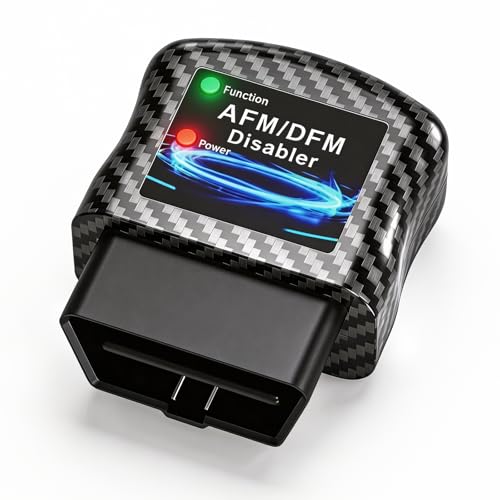
This disabler is marketed as an American-designed, plug-and-play solution compatible with a wide range of GM V6 and V8 engines, including the 4.3L, 5.3L, 6.0L, and 6.2L found in the Chevrolet Silverado, GMC Sierra, Yukon, Tahoe, Suburban, and related platforms. According to the manufacturer, it plugs directly into the OBD-II port — no wiring, no splicing, and no tools required. The device begins working as soon as the engine starts and can be unplugged at any time to restore factory AFM/DFM/DOD operation.
Key Specs and Features
- Compatibility: GM V6 and V8 engines — 4.3L, 5.3L, 6.0L, 6.2L
- Fitment: Chevrolet Silverado, GMC Sierra, Yukon, Tahoe, Suburban, and other GM trucks/SUVs
- Installation: OBD-II plug-in; no tools or wiring modifications
- Reversibility: Fully reversible — unplug to restore factory behavior
- Design origin: American-designed
What Verified Owners Report
Across verified customer reviews, the most consistent praise centers on the immediate improvement in driving feel. Owners frequently describe the elimination of the “shudder” or “hunting” sensation that occurs when the engine transitions between V4 and V8 modes. Many report that the truck feels more responsive and that transmission behavior smooths out noticeably, since the ECU is no longer constantly adjusting shift points around cylinder deactivation events.
Several owners also note that oil consumption decreased after installing the disabler, which aligns with the widely documented connection between AFM operation and excessive oil use in GM engines. The plug-and-play installation is universally praised — most reviewers report a setup time of under 60 seconds.

On the downside, some owners report a slight decrease in highway fuel economy, which is expected since the engine is now running on all cylinders at all times. A few reviewers mention that the check-engine light appeared initially, though this seems to be uncommon and often resolves after a drive cycle. There are also occasional reports of compatibility issues with certain model years, so verifying your specific vehicle’s compatibility before purchasing is important.
Who Should Buy This
This disabler is ideal for any GM truck or SUV owner who wants to eliminate AFM/DFM/DOD operation without the cost or complexity of an ECU tune. It’s particularly compelling for owners who are still under warranty and want a reversible solution, or for those who have already experienced early signs of lifter noise or oil consumption. If you prioritize driving feel and long-term engine health over the marginal fuel economy gains of cylinder deactivation, this is a straightforward investment. The decision framework is similar to what we discussed in our Roborock Saros Z70 upgrade comparison — sometimes the newer generation’s improvements justify the purchase, and sometimes the core functionality is what matters most.
Pros:
- True plug-and-play installation (under 60 seconds)
- Broad GM V6/V8 compatibility
- Eliminates AFM/DFM shudder and rough transitions
- Fully reversible — no permanent modifications
- May reduce AFM-related oil consumption
Cons:
- Slight decrease in highway fuel economy expected
- Rare check-engine light reports on certain model years
- Verify compatibility with your specific vehicle before buying
GOOACC 635-Piece Car Push Retainer Clips and Auto Fasteners Assortment

While not a disabler itself, this 635-piece fastener assortment from GOOACC is a practical companion for GM truck owners who are doing any underhood or interior work alongside their AFM disabler installation. If you’re pulling interior panels to run wiring, replacing engine covers, or tackling any of the other maintenance tasks that tend to accompany a disabler install, having the right push retainer clips on hand prevents the frustration of broken or missing fasteners.
Key Specs and Features
- Quantity: 635 pieces across 16 of the most popular sizes
- Material: Nylon construction
- Application: Bumper, fender, door panel, and interior trim fasteners
- Compatibility: Fits a wide range of vehicles including GM trucks, though not vehicle-specific
- Storage: Comes in a divided organizer case
What Verified Owners Report
This is one of the most reviewed auto fastener kits available, and the consensus among verified buyers is overwhelmingly positive. Owners praise the variety of sizes included, noting that the kit covers the vast majority of common clip types found on American trucks and SUVs. The organized case makes it easy to find the right fastener quickly, and the nylon construction is reported to be durable enough for repeated use.
The most common complaint is that certain specific clip sizes may not be included, particularly for newer vehicles or unusual trim pieces. A few reviewers note that the fit on some clips isn’t as tight as OEM fasteners, though most consider them perfectly adequate for the task. Some owners wish there were more of the most commonly used sizes and fewer of the rarely needed ones.

Who Should Buy This
This kit is best suited for DIY mechanics and truck owners who regularly work on their own vehicles. If you’re installing an AFM disabler and plan to do additional maintenance — replacing valve covers, cleaning throttle bodies, or addressing any of the other common GM truck tasks — having a comprehensive fastener kit saves trips to the parts store. It’s also a smart addition to any truck toolbox for roadside repairs.
Pros:
- 635 pieces across 16 popular sizes — excellent variety
- Organized storage case included
- Durable nylon construction
- Useful for a wide range of GM truck maintenance tasks
Cons:
- Not vehicle-specific — some clips may not match your exact application
- Fit may be slightly looser than OEM on certain sizes
- Distribution of sizes may not match your specific needs
Gen 1 vs. Gen 2 AFM Disablers: What Changed?
The AFM disabler market has evolved significantly over the past few years. Earlier-generation disablers (often referred to as “Gen 1” devices) were typically simpler in their approach — many worked by sending a constant signal through the OBD-II port to prevent cylinder deactivation. While effective, some of these earlier devices had limitations:
- Compatibility gaps: Gen 1 devices often supported only AFM (the older system) and didn’t account for DFM (Dynamic Fuel Management), which GM introduced on 2019+ models with more sophisticated cylinder-deactivation patterns.
- Check-engine light issues: Earlier devices were more prone to triggering diagnostic trouble codes, particularly on newer ECU calibrations.
- Build quality: Some first-generation disablers used overseas components with minimal quality control.
The current generation of disablers — like the American Design unit reviewed above — addresses many of these shortcomings. Key improvements typically include:
- Broader DFM support: Newer devices are designed to work with both the older AFM system and the newer DFM system, covering a wider range of model years.
- Improved ECU communication: Updated firmware reduces the likelihood of check-engine lights and diagnostic codes.
- American design and quality control: Several manufacturers have moved design and quality oversight stateside, which can improve consistency.
Is the Upgrade Worth It?
If you already own a Gen 1 disabler that’s working perfectly on your vehicle — no check-engine lights, smooth operation, and proper AFM deactivation — there’s limited reason to upgrade. The core function is the same: keep all cylinders firing.
However, upgrading makes sense if:
1. You have a 2019+ vehicle with DFM — older disablers may not fully support the newer system. 2. You’re experiencing check-engine lights with your current disabler — newer firmware often resolves this. 3. You’re buying your first disabler — there’s no reason to seek out an older-generation device when current options offer broader compatibility. 4. You’re transferring the device to a newer vehicle — if you’ve upgraded your truck, your old disabler may not be compatible.
The upgrade decision here follows a familiar pattern. Much like the BenQ ScreenBar Halo 2 vs. Halo comparison, the newer generation refines rather than reinvents — and whether that refinement justifies the cost depends entirely on your specific situation.
Installation Tips for GM Truck Owners
Installing an OBD-II disabler is about as simple as automotive modifications get, but a few tips can help ensure a smooth experience:
1. Locate your OBD-II port: On most GM trucks (Silverado, Sierra, Tahoe, Yukon), the OBD-II port is under the dashboard on the driver’s side, usually to the left of the steering column. 2. Turn off the engine first: Plug in the disabler with the ignition off, then start the vehicle normally. 3. Allow a drive cycle: Some vehicles may need a short drive cycle (15–20 minutes of mixed driving) before the disabler fully takes effect and any initial codes clear. 4. Monitor for codes: If a check-engine light appears and persists beyond one or two drive cycles, verify that the disabler is compatible with your specific model year and engine. 5. Keep the device accessible: Since the disabler plugs into the OBD-II port, you’ll need to unplug it for any dealership service visits where they need diagnostic access.
Fuel Economy Expectations
One of the most common questions about AFM/DFM disablers is the impact on fuel economy. GM’s cylinder deactivation systems are rated to improve fuel economy by 1–2 MPG under ideal conditions (steady-state highway cruising). In practice, many owners report that the real-world difference is smaller — often less than 1 MPG — because the system cycles on and off frequently in mixed driving conditions.
After installing a disabler, most owners report a fuel economy decrease of 0.5–1.5 MPG, depending on driving habits. For many, this is a worthwhile trade-off given the smoother driving experience and the potential to avoid thousands of dollars in lifter repairs.
Comparison Summary
Final Verdict
For GM truck and SUV owners dealing with AFM, DFM, or DOD-related issues — or those who simply want to prevent them — a plug-in disabler is one of the most cost-effective modifications available. The American Design AFM DFM DOD Disabler offers broad compatibility across GM’s V6 and V8 lineup, true plug-and-play installation, and the peace of mind that comes with keeping all cylinders active. If you’re already running a Gen 1 disabler without issues, upgrading is optional. But if you’re buying for the first time, or if your current device doesn’t support DFM on a 2019+ vehicle, the current generation is the clear choice.
Pairing the disabler with a comprehensive fastener kit like the GOOACC 635-piece assortment makes sense if you’re planning any additional underhood or interior work — and most GM truck owners who start modifying rarely stop at just one part.
How We Research
Our reviews are based on thorough analysis of manufacturer specifications, product documentation, and verified customer and expert reviews from multiple sources. We have not personally tested, owned, or handled the products reviewed in this article. Instead, we synthesize publicly available information to provide an honest, well-rounded assessment. We attribute claims to their real sources — manufacturer specs, verified owner feedback, and documented expert analysis — rather than fabricating first-hand experience. Our goal is to save you time by curating the most relevant information in one place so you can make a confident purchasing decision.


Leave a Reply