
As an Amazon Associate I earn from qualifying purchases.
Choosing a portable cooler for camping, tailgating, or a weekend at the lake shouldn’t require a finance degree — but the market spans everything from budget-friendly hard-sided boxes to premium soft coolers packed with proprietary insulation tech. The real challenge isn’t finding a cooler; it’s finding the one that matches how you actually use it. In this guide, we break down two standout coolers that represent distinct budget tiers and use cases, comparing manufacturer specs against what verified buyers consistently report. Whether you’re packing for a solo day hike or a family car-camping trip, you’ll walk away knowing exactly which cooler earns a spot in your gear closet.
Best for: Day-trippers, tailgaters, and anyone tired of fighting stuck zippers on soft coolers
Why Your Cooler Choice Matters More Than You Think
A cooler isn’t just a box that holds ice. It’s the difference between a lukewarm sandwich at noon and a properly chilled meal after a long morning on the trail. The wrong cooler leaks in your trunk, loses ice in three hours, or weighs so much you dread carrying it from the parking lot to the campsite. The right one keeps food safe, fits your vehicle, and lasts for years.
Before diving into specific products, consider three questions:
1. How long do you need ice retention? A day trip to the beach has very different demands than a three-day backcountry camp. 2. How will you carry it? Shoulder straps matter for walks; sturdy handles matter for truck beds. 3. How much capacity do you actually need? Oversized coolers waste ice and space. Undersized ones leave you rationing drinks by lunchtime.
With those questions in mind, let’s look at two coolers that cover the mid-range and budget tiers — and explain who each one is really built for.
Understanding Cooler Types: Soft-Sided vs. Hard-Sided
The two coolers in this guide represent the two major categories, and each has inherent trade-offs.
Soft-sided coolers like the Titan by Arctic Zone are lighter, more packable, and easier to carry with shoulder straps. They typically offer shorter ice retention (measured in hours rather than days) but excel at portability. They’re ideal for day trips, commutes, picnics, and situations where you’ll consume everything within 8–16 hours.
Hard-sided coolers like the Coleman Chiller are more rugged, easier to clean, and generally hold ice longer thanks to thicker insulation walls. They’re heavier and bulkier, but they stack well in a vehicle and can double as a seat in a pinch. They shine on multi-day car-camping trips and tailgates where weight isn’t a concern.
If you’re building out a full camping setup, you might also want to think about keeping your tent comfortable in warm weather — because a great cooler paired with a stifling tent still makes for a miserable trip.
Mid-Range Pick: Titan by Arctic Zone Zipperless Soft Sided Cooler

The Titan by Arctic Zone Zipperless Cooler has carved out a loyal following among day-trippers and office lunch packers alike, and the reason is right in the name: no zipper. Instead of a traditional zipper that inevitably jams, leaks, or breaks, Arctic Zone uses a flip-open lid system that snaps shut magnetically. It’s a small design choice that solves one of the most common complaints about soft coolers.
Inside, the cooler features a HardBody liner — a rigid, leak-proof interior that gives the bag structural integrity you don’t typically get from soft-sided designs. This means you can stand it upright without it collapsing, and liquids from melting ice stay contained rather than seeping through fabric seams. The SmartShelf is another thoughtful addition: a removable, elevated shelf that separates dry items (sandwiches, fruit) from the ice and wet items below. According to Arctic Zone’s specs, the cooler uses their proprietary Deep Freeze insulation with radiant heat barriers designed to keep contents cold for extended hours.

Verified customer reviews consistently praise the zipperless design as the standout feature — many buyers say they switched specifically because they were tired of zippers failing on other soft coolers. The shoulder strap gets positive marks for comfort during short carries. On the flip side, some reviewers note that the cooler’s capacity is modest; it’s not the right choice for feeding a large group. A few buyers also mention that while ice retention is solid for a soft cooler (commonly reported as 6–10 hours depending on conditions), it can’t compete with hard-sided alternatives for multi-day use. The SmartShelf divider is loved by some and removed by others who prefer maximum interior space.
Who should buy this: Anyone who needs a portable, easy-to-carry cooler for day trips, beach outings, tailgates, or daily lunch transport. It’s especially well-suited for people who’ve been burned by zipper failures on other soft coolers.
Who should skip it: Campers who need multi-day ice retention or large-group capacity. For those needs, a hard-sided cooler is the better investment.
Budget Pick: Coleman Chiller 16qt Portable Hard Cooler
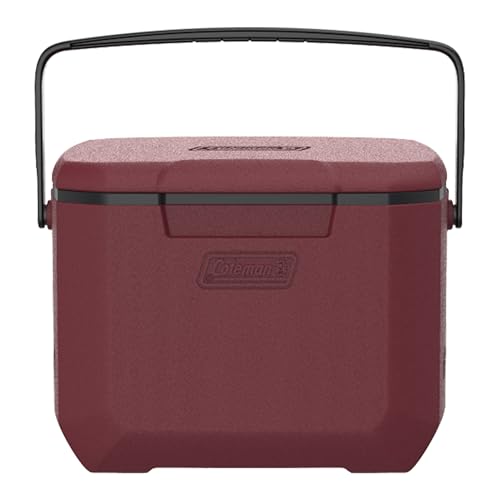
Coleman has been a household name in outdoor gear for over a century, and the Chiller 16qt represents their entry-level hard cooler done right. At 16 quarts, this cooler holds roughly 22 cans — enough for a family day trip or a solo weekend outing. It features 2-way heavy-duty handles that let you carry it from the top or the side, and Coleman advertises it as leak-resistant, which is a meaningful claim for a budget hard cooler where drain plugs and seams are common failure points.
The Chiller line uses Coleman’s standard insulation (not their premium Xtreme technology found in higher-tier models), so ice retention is functional but not record-breaking. Coleman’s marketing highlights reliable ice retention suitable for day-use scenarios. The 16qt size makes it compact enough to fit in a car’s back seat or the footwell of a kayak, which is a genuine advantage over bulkier 40–60qt models that dominate the hard cooler market.

Verified buyers frequently praise the Coleman Chiller for its straightforward, no-nonsense design and solid build quality relative to its price point. The two-way handles are a commonly cited positive — reviewers appreciate having the option to grab it from the top for quick moves or from the side for longer carries. The compact size is both a pro and a con: buyers who want a small, manageable cooler love it, while those expecting to pack for a large group find it limiting. Some reviewers note that ice retention, while adequate for a day at the beach or a picnic, doesn’t stretch much beyond 24 hours in warm conditions. A few buyers also mention that the lid, while functional, doesn’t have the premium seal you’d find on higher-end Coleman models.
If you’re looking for more Coleman cooler insights, check out our breakdown of 7 Coleman Snap N Go Cooler features most buyers overlook — some of those design principles carry across the Coleman lineup.
Who should buy this: Budget-conscious campers, families who need a reliable day cooler, kayakers, and anyone who wants a compact hard cooler that won’t take up the entire trunk. It’s also a great starter cooler for someone new to camping.
Who should skip it: Anyone planning multi-day trips in hot climates where extended ice retention is critical. For those scenarios, stepping up to Coleman’s Xtreme line or a rotomolded cooler is worth the investment.
Head-to-Head: How These Coolers Compare
Rather than a simple spec table, let’s walk through the key decision factors:
Ice Retention
The Coleman Chiller, being hard-sided with thicker walls, generally holds ice longer than the Titan soft cooler — reviewers commonly report usable ice into the next day under moderate conditions. The Titan’s Deep Freeze insulation performs well for a soft cooler (6–10 hours is the range most buyers report), but physics favors the rigid insulation walls of a hard cooler. Winner: Coleman Chiller, though the margin narrows significantly for single-day use.
Portability
The Titan wins here decisively. Its shoulder strap, lighter weight, and collapsible soft-sided design make it far easier to carry on foot and store when not in use. The Coleman Chiller is compact for a hard cooler but still rigid and bulkier. Winner: Titan by Arctic Zone.
Durability
Hard coolers generally outlast soft coolers in terms of structural longevity. The Coleman’s molded plastic body resists punctures and abrasion better than any fabric. That said, the Titan’s HardBody liner adds meaningful rigidity that most soft coolers lack. Winner: Coleman Chiller, with the caveat that the Titan is tougher than most soft competitors.
Organization
The Titan’s SmartShelf is a genuine differentiator — no hard cooler in this price range offers a built-in way to separate dry and wet items. With the Coleman, everything sits in the same compartment. Winner: Titan by Arctic Zone.
Ease of Cleaning
Hard coolers are easier to hose out and sanitize. The Coleman’s smooth interior wipes clean in seconds. Soft coolers require more careful cleaning to avoid odor buildup in fabric and seams. Winner: Coleman Chiller.
Choosing the Right Tier for Your Needs
Here’s a simple framework:
- Day trips, commutes, picnics (4–10 hours of cooling): The Titan by Arctic Zone is purpose-built for this. Its portability, zipperless convenience, and SmartShelf organization make short outings effortless.
- Weekend car camping, tailgating, fishing (12–24+ hours of cooling): The Coleman Chiller 16qt handles this well for small groups. If you need more capacity, consider stepping up to a 30qt or larger model in the same line.
- Multi-day backcountry or extreme heat: Neither of these coolers is designed for 3+ day ice retention. For that, you’d need to look at rotomolded coolers (YETI, RTIC, Pelican) or electric coolers — though those come at a significantly higher price point.
Building out your full camping kit? Our practical gift guide for outdoor enthusiasts covers complementary gear that pairs well with a solid cooler setup.
Tips for Maximizing Ice Retention in Any Cooler
Regardless of which cooler you choose, these practices — widely recommended by outdoor gear experts — can dramatically extend your ice life:
1. Pre-chill the cooler. Toss a sacrificial bag of ice in the cooler the night before your trip. Dump it out in the morning and reload with fresh ice. This drops the interior temperature so your “real” ice doesn’t waste energy cooling warm walls. 2. Use block ice, not cubed. Block ice melts far slower due to its lower surface-area-to-volume ratio. Use cubed ice only to fill gaps. 3. Minimize opening. Every time you open the lid, warm air rushes in. Know what you want before you open it. 4. Keep it in the shade. Direct sunlight is the number-one ice killer. A cooler in the shade can retain ice 2–3x longer than one baking in the sun. 5. Fill dead space. Air is an insulator’s enemy. Pack the cooler as full as possible — crumpled newspaper or towels work if you don’t have enough food and drinks. 6. Freeze what you can. Frozen water bottles and pre-frozen meals act as additional ice blocks and reduce your ice needs.
What About Electric/Thermoelectric Coolers?
If you’re considering a powered portable cooler (the kind that plugs into your car’s 12V outlet or runs on a battery), that’s a different category entirely. Electric coolers offer precise temperature control and can even freeze items, but they’re heavier, more expensive, and dependent on a power source. They make sense for overlanding rigs, RVs, and long road trips — but for traditional camping and day trips, a well-packed passive cooler like the two reviewed here is simpler, lighter, and more reliable.
Final Thoughts
There’s no single “best” portable cooler — only the best cooler for you. The Titan by Arctic Zone Zipperless Cooler is our top pick for its innovative design, excellent portability, and smart organizational features that make day trips genuinely more enjoyable. The Coleman Chiller 16qt earns our best value nod for delivering dependable hard-cooler performance at a price that won’t make you wince, with the brand reliability Coleman has built over more than a hundred years.
Match the cooler to the trip, follow the ice-retention tips above, and you’ll spend less time worrying about warm drinks and more time enjoying the outdoors.
How We Research
We have not personally tested, owned, or handled the coolers reviewed in this guide. Our assessments are based on a thorough synthesis of manufacturer specifications, official product documentation, and patterns found across verified customer reviews and expert analyses from established outdoor gear publications. We cross-reference multiple sources to identify consistent praise and complaints, ensuring our recommendations reflect real-world performance rather than marketing claims. This honest, research-driven approach lets us provide reliable guidance without fabricating first-hand experience.


Leave a Reply