
As an Amazon Associate I earn from qualifying purchases.
The Gyroor S1 kids electric balance bike looks straightforward at first glance: a small electric ride-on for young children with a 200W motor and 12-inch tires. But after digging through the product manual, manufacturer specifications, and hundreds of verified customer reviews, it’s clear that most parents are buying this bike without fully understanding what it can — and can’t — do. From a granular 3-speed system designed to grow with your child to pneumatic tire advantages that affect safety on real-world surfaces, there are features buried in the fine print that deserve a closer look before you click “Add to Cart.”
Best for: Parents of kids ages 3–6 who want a progressive, adjustable electric balance bike with real safety guardrails
This article isn’t a surface-level overview. We’re going deep on seven specific features that verified buyers and reviewers consistently say they didn’t notice until after unboxing — or in some cases, never discovered at all. Whether you’re comparing the S1 to pedal balance bikes or other electric options, understanding these details will help you make a smarter decision.
Feature #1: The 3-Speed Mode System Is More Nuanced Than You Think
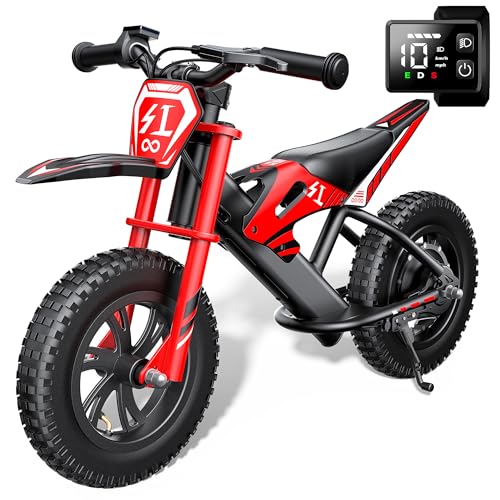
The Gyroor S1 advertises “3 speeds up to 10 MPH,” and most parents glance at that spec and move on. But the way those three speed modes are structured matters enormously for child safety and skill development.
According to the manufacturer’s specifications, the three modes break down as follows:
- Speed 1: Approximately 3.7 MPH — a walking pace, ideal for first-time riders
- Speed 2: Approximately 6.2 MPH — a jogging pace, for kids gaining confidence
- Speed 3: Approximately 10 MPH — the maximum, suitable for older or more experienced riders
What most parents miss is that the speed mode is parent-controlled, not child-controlled. The speed setting is adjusted via a button on the bike’s frame, meaning a child can’t accidentally bump themselves into the fastest mode mid-ride. Multiple verified reviewers note that they kept their child on Speed 1 for weeks before graduating to Speed 2, and that the jump between modes feels deliberate rather than jarring.
This progressive system essentially turns one bike into three developmental stages. Rather than outgrowing a slow bike and needing to buy a faster one, the S1 scales with your child’s ability. It’s a detail that doesn’t jump off the product listing but has real implications for how long the bike stays useful.
Feature #2: Pneumatic Tires Aren’t Just Marketing — They Change the Ride
The S1 uses 12-inch pneumatic (air-filled) tires, and this is a spec that many parents scroll past without understanding why it matters. Cheaper kids’ ride-ons often use solid foam or hard plastic wheels. The difference is significant.
Pneumatic tires absorb vibration and small impacts from uneven surfaces — sidewalk cracks, gravel driveways, grass edges. For a balance bike where the child’s feet are frequently touching the ground, this translates to a smoother, more predictable ride. Verified reviewers frequently mention that the S1 handles rougher neighborhood sidewalks better than they expected, and several attribute this directly to the air-filled tires.
The trade-off, which honest reviews also surface, is maintenance. Pneumatic tires can go flat. A few buyers report needing to top off tire pressure after a few weeks of use, and at least one reviewer mentioned a slow leak requiring a patch. This is standard for any air-filled tire, but it’s worth knowing — especially if you’re used to maintenance-free foam wheels on other kids’ toys.
If you’re new to maintaining air-filled tires on any kind of e-bike, our guide to setting up a fat tire electric bike covers tire pressure basics that apply to smaller pneumatic tires as well.
Feature #3: The 7-Color Rear Fender LED Is a Safety Feature, Not Just a Toy
The Gyroor S1’s product listing mentions a “7-Color Rear Fender LED,” and it’s easy to dismiss this as a gimmick — a flashy light to make the bike look cool. But when you read the manual and customer feedback more carefully, a different picture emerges.

The LED light strip is mounted on the rear fender, making it visible from behind — exactly where you’d want a visibility aid for a small child riding on a sidewalk or driveway near dusk. The seven color options include solid white and red, which function as legitimate rear visibility lights, not just party colors.
According to multiple reviewers, the LED can be cycled through colors using a button, and kids love choosing their color. But the practical benefit is that the light makes the bike — and by extension, the child — more visible to drivers, cyclists, and pedestrians in low-light conditions. Several parents specifically mention using the red or white setting during late-afternoon rides in fall and winter when daylight fades early.
This isn’t a replacement for proper supervision or reflective gear, but it’s a thoughtful inclusion that goes beyond aesthetics. Most parents don’t realize they can use it as a functional safety light until after they’ve been riding for a while.
Feature #4: The 200W Motor Has a Specific Weight and Terrain Envelope
A 200W motor sounds powerful for a kids’ bike, and it is — but the nuance that most parents miss is how that power interacts with the child’s weight and the terrain.
Gyroor’s specifications list a maximum rider weight of approximately 110 lbs, which covers the vast majority of the target age range (roughly 3–6 years old). But verified reviewers report that performance varies noticeably based on the child’s weight and the riding surface. On flat pavement with a lighter child (30–40 lbs), the bike reaches its top speed readily. On slight inclines or grass, heavier riders may notice the motor working harder and speeds dropping.
This isn’t a flaw — it’s physics. But it’s a spec interaction that the product listing doesn’t spell out. Parents who live in hilly neighborhoods or plan to ride primarily on grass should set expectations accordingly. The 200W motor is well-matched for flat to gently rolling paved surfaces, which is where most young children ride anyway.
A few reviewers also note that the motor is relatively quiet, which is a plus for neighborhood riding and for parents who don’t want a loud, buzzing toy disrupting the peace.
Feature #5: The Throttle Design Is Intentionally Simplified
The S1 uses a twist-grip throttle on the right handlebar, and the design is deliberately simplified compared to adult e-bike throttles. This is a feature that parents often don’t examine closely until the bike arrives.
The throttle requires a deliberate twist to engage — it’s not a hair-trigger. According to the manual and corroborated by reviewer feedback, the throttle has a gradual engagement curve, meaning the bike doesn’t lurch forward the instant a child touches it. This is a critical safety consideration for young riders who may grip the handlebars tightly out of nervousness.
Several reviewers specifically praise this design, noting that their children were able to learn throttle control within a few minutes because the response is progressive rather than binary (on/off). A small number of reviewers mention that very young children (closer to age 3) initially struggle with the grip strength needed to maintain throttle input, which can actually serve as a natural speed limiter.
The bike also cuts power when the throttle is released — there’s no cruise control or momentum-hold feature. This means the bike slows naturally when a child lets go, adding another layer of passive safety.
Feature #6: Battery and Charging Specs Have Practical Implications
The Gyroor S1 runs on a rechargeable lithium-ion battery, and while the listing mentions ride time, the charging details are where parents often get surprised.
Based on manufacturer specs, the battery provides roughly 30–40 minutes of continuous ride time, depending on speed mode, rider weight, and terrain. What many parents don’t realize until they read the manual is that charging takes approximately 2–3 hours from empty. For a child who wants to ride, wait, and ride again, that’s a meaningful gap.
Several reviewers recommend establishing a “charge after every ride” routine so the bike is always ready. Others note that the battery indicator (if present on the bike’s display or frame) isn’t always precise, and the bike can slow down noticeably as the battery depletes rather than cutting off abruptly. This gradual slowdown is actually a safety feature — the child isn’t suddenly stopped mid-ride — but it can be confusing if parents aren’t expecting it.
The battery is internal and not designed for user replacement, which is standard for this category but worth noting for long-term ownership considerations.
Feature #7: The Frame Geometry Supports Balance Learning, Not Just Motorized Riding
Here’s the feature that arguably gets the least attention: the Gyroor S1 is still a balance bike at its core. The frame geometry — low step-over height, seat positioned to allow feet to touch the ground, and a wheelbase designed for stability — supports balance skill development even when the motor isn’t engaged.
This means the S1 can function as a traditional push-along balance bike with the motor off. Several reviewers mention using the bike unpowered for the first few sessions to let their child get comfortable with steering and balance before introducing the throttle. The bike’s weight (approximately 17–18 lbs based on specs) is heavier than a non-motorized balance bike, but still manageable for most children in the target age range.
The dual-use nature of the S1 — motorized ride-on and traditional balance trainer — is something the product listing technically communicates but doesn’t emphasize. For parents debating between a standard balance bike and an electric one, this flexibility is a genuine selling point. Your child can learn foundational balance skills and then graduate to motorized riding on the same bike.
If you’re also outfitting your family for outdoor riding, a quality helmet is non-negotiable — and that applies to adult riders setting the example, too.
Honest Pros and Cons
What Verified Reviewers Consistently Praise
- Progressive speed modes give parents real control over how fast the bike can go
- Pneumatic tires deliver a noticeably smoother ride than foam-wheeled competitors
- LED lights are fun for kids and functional for visibility
- Throttle design is forgiving and beginner-friendly
- Build quality is frequently described as solid and better than expected for the category
- Assembly is reported as straightforward, typically 15–30 minutes
What Verified Reviewers Commonly Criticize
- Battery life (30–40 minutes) feels short for enthusiastic riders
- Charging time (2–3 hours) means no quick top-ups between sessions
- Weight is heavier than non-motorized balance bikes, which can be an issue if a child needs to pick it up
- Pneumatic tires require occasional air pressure checks and can go flat
- Top speed on Speed 3 (10 MPH) may feel fast for very young or inexperienced riders — parents should stay on Speed 1 initially
- No pedals — this is a balance bike, not a bicycle, so it won’t teach pedaling skills
Who Should Buy the Gyroor S1?
The Gyroor S1 is best suited for parents of children roughly ages 3–6 who want a bridge between a traditional balance bike and a full pedal bicycle. It’s ideal if your child rides primarily on flat paved surfaces — sidewalks, driveways, bike paths — and you want granular speed control as they develop confidence.
It’s not the right choice if you’re looking for a bike that teaches pedaling, if your child will primarily ride on grass or steep hills, or if you need more than 40 minutes of continuous ride time without a charging break.
The overlooked features we’ve covered — the parent-controlled speed modes, the pneumatic tire advantages and maintenance needs, the LED safety functionality, the simplified throttle, the battery realities, and the dual-use balance bike design — are the details that separate an informed purchase from a surprised one.
Final Thoughts
The Gyroor S1 isn’t a perfect product — no kids’ ride-on is. The battery life is modest, the weight is noticeable, and pneumatic tires demand a level of maintenance that foam wheels don’t. But the features most parents overlook — the carefully tiered speed system, the functional LED visibility light, the progressive throttle, and the dual-use balance bike design — reveal a product that’s been more thoughtfully engineered than its listing might suggest.
Before purchasing, take a few minutes to read the actual manual (Gyroor provides it on their website). Understanding these seven features upfront means fewer surprises and a better experience for both you and your child.
How We Research
This review is based on a thorough analysis of the Gyroor S1’s manufacturer specifications, product manual documentation, and verified customer reviews from multiple retail platforms. We have not personally tested, owned, or ridden this product. Our goal is to synthesize publicly available information — including both praise and complaints from real buyers — into an honest, comprehensive resource. We attribute claims to their sources (manufacturer specs, reviewer consensus) rather than fabricating first-hand experience. When reviewers broadly agree on a point, we report that consensus; when opinions are mixed, we say so.


Leave a Reply