
As an Amazon Associate I earn from qualifying purchases.
The Logitech G PRO X2 SUPERSTRIKE has set a new benchmark for wireless gaming mice with its magnetic analog rapid-trigger switches, sub-millisecond response times, and featherweight design. But at roughly $180, it’s a serious investment — one that many competitive gamers simply can’t justify. The good news? You don’t necessarily need to spend that much to upgrade your setup. Whether you’re looking for a complementary one-handed keypad with programmable rapid-fire keys, a premium wireless headset to complete your competitive loadout, or a desk-spanning mouse pad that gives any mouse better tracking, there are compelling options that cost significantly less. In this guide, we break down four products that pair well with — or partially replace — the SUPERSTRIKE’s value proposition, with honest trade-off notes so you know exactly what you’re gaining and giving up.
Best for: Competitive FPS players who demand the absolute fastest click response and lowest latency
Understanding the SUPERSTRIKE’s Appeal — and Where Alternatives Fit
Before diving into alternatives, it’s worth understanding what makes the G PRO X2 SUPERSTRIKE special. Its magnetic analog switches allow for customizable actuation points — essentially “rapid trigger” technology borrowed from high-end keyboards — applied to mouse clicks. This means you can set your click to register at the slightest touch or deeper into the travel, depending on your preference. Combined with Logitech’s LIGHTSPEED wireless, a HERO 2 sensor capable of 44,000 DPI, and a weight of just 60 grams, it’s a formidable package.
But here’s the honest truth: most gamers won’t notice the difference between the SUPERSTRIKE’s rapid-trigger clicks and a well-tuned standard optical switch mouse in everyday gameplay. The advantage is measurable in lab conditions and matters at the highest tiers of competitive play, but for the vast majority of players, the law of diminishing returns kicks in hard at this price point.
That’s why we’ve assembled a mix of peripherals that either complement a more affordable mouse or enhance your overall setup in ways that deliver more tangible, felt improvements to your gaming experience.
The Benchmark: Logitech G PRO X2 SUPERSTRIKE Wireless Gaming Mouse

Let’s start with the mouse itself, because understanding the SUPERSTRIKE in detail helps you decide whether you truly need it or whether redirecting that budget elsewhere makes more sense.
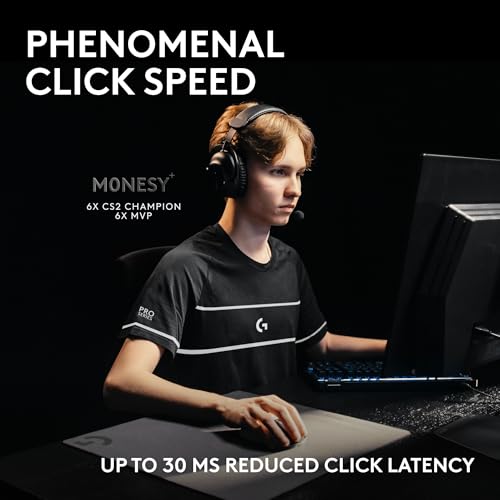
The G PRO X2 SUPERSTRIKE builds on the already excellent G PRO X2 LIGHTSPEED chassis — an ambidextrous, 60-gram shell with five programmable buttons and a shape that’s been refined through years of esports feedback. The headline feature is the customizable rapid-trigger magnetic analog switches. Unlike traditional mechanical or optical switches that have a fixed actuation point, these let you adjust exactly how far you need to press before a click registers. In fast-paced shooters, this can shave milliseconds off your reaction time for spam-clicking or rapid-fire scenarios.
The HERO 2 sensor tracks flawlessly on virtually any surface, and LIGHTSPEED wireless delivers a rock-solid 1ms polling rate connection. Battery life sits around 95 hours, which is genuinely impressive. Logitech’s G HUB software, while occasionally clunky, gives you granular control over DPI stages, button mapping, and the all-important actuation point settings.
Pros:
- Rapid-trigger magnetic switches are genuinely innovative for a mouse
- Exceptional sensor accuracy and wireless stability
- Ultralight 60g design with no holes in the shell
- Outstanding 95-hour battery life
Cons:
- Premium price that’s hard to justify for casual gamers
- Ambidextrous shape may not suit everyone (no ergonomic right-hand contour)
- G HUB software can be buggy and resource-heavy
- Rapid-trigger advantage is marginal outside top-tier competitive play
Who should buy it: If you’re a serious competitive FPS player — think Valorant Immortal, CS2 Faceit Level 10, or Apex Predator — and you’ve already optimized every other part of your setup, the SUPERSTRIKE is the current pinnacle. One reviewer summed it up well: “I came from the regular G PRO X2 and the rapid trigger clicks are noticeably snappier. Is it worth the upgrade? For ranked grinders, absolutely. For casual players, probably not.”
Best for: Elite competitive FPS players who want every possible edge.
Razer Tartarus V2 Gaming Keypad

Here’s an alternative approach to faster inputs that many gamers overlook: instead of spending your entire budget on a mouse, pair a solid mid-range mouse with a dedicated gaming keypad. The Razer Tartarus V2 gives you 32 fully programmable keys with mecha-membrane switches, an analog thumbstick, and a scroll wheel — all arranged in an ergonomic layout designed specifically for gaming.
The mecha-membrane switches offer a tactile bump with a softer landing than full mechanical keys, which reduces finger fatigue during long sessions. You can program macros, rapid-fire sequences, and complex key combinations through Razer Synapse, effectively giving you “rapid trigger”-like functionality for movement and abilities through software rather than hardware. The adjustable palm rest and wrist pad keep your hand comfortable, and the 8-way directional thumbpad can replace WASD movement entirely if you prefer analog control.
The trade-off? This is a wired device, so you’re adding a cable to your desk. The mecha-membrane switches, while pleasant, don’t have the crisp actuation of true mechanical switches. And there’s a genuine learning curve — expect a week or two of fumbling before muscle memory kicks in.

Pros:
- 32 programmable keys with macro support for rapid-fire inputs
- Ergonomic design with adjustable palm rest reduces strain
- Analog thumbstick adds movement precision not possible with WASD
- Razer Synapse offers deep customization and profile switching
Cons:
- Wired only — no wireless option
- Mecha-membrane switches feel mushy compared to true mechanicals
- Steep learning curve if you’ve never used a gaming keypad
- Synapse software requires an account and can be bloated
Who should buy it: MMO, MOBA, and strategy gamers who want more programmable inputs at their fingertips, or FPS players looking to offload complex binds from a standard keyboard. As one reviewer noted: “Once I got past the learning curve, I couldn’t go back to a regular keyboard for gaming. The thumb stick for movement is a game changer in shooters.”
If you’re interested in one-handed keypads, you might also want to check out our guide on how to set up the Redragon K580 VATA with macros, RGB, and hot-swap switches for more tips on getting the most out of programmable peripherals.
Best for: Gamers who want programmable rapid-fire and macro keys alongside any mouse.
Logitech G Astro A50 Wireless Gaming Headset + Base Station

This might seem like an unconventional “alternative” to a mouse, but hear us out. If you’re debating whether to spend your budget on the SUPERSTRIKE or upgrade another part of your setup, a premium wireless headset like the Astro A50 can deliver a more immediately noticeable competitive advantage than marginally faster mouse clicks. Accurate spatial audio lets you hear footsteps, reloads, and ability cues with pinpoint directional accuracy — information that directly translates to better positioning and reaction time.
The A50 features Logitech’s PLAYSYNC audio switcher, which lets you seamlessly swap between PS5, Xbox, and PC without re-pairing. The headset delivers under 16ms of wireless latency, which is effectively imperceptible. The magnetic base station charges the headset when you dock it, so you never have to fumble with cables. Sound quality is excellent for gaming, with a warm, slightly bass-forward signature that makes explosions satisfying without drowning out crucial mid-range details like footsteps.
The build quality is solid but the ear cushions can get warm during extended sessions. It’s also a chunky headset — if you prefer lightweight, minimalist designs, this isn’t it. And while the audio is great for gaming, audiophiles will find the tuning too colored for music listening.

Pros:
- PLAYSYNC multi-platform switching is genuinely seamless
- Magnetic dock charging eliminates cable hassle
- Excellent spatial audio for competitive gaming
- Low wireless latency under 16ms
Cons:
- Still a premium-priced headset, though less than the SUPERSTRIKE
- Ear cushions trap heat during long sessions
- Heavier than many competing wireless headsets
- Sound signature is gaming-tuned, not audiophile-neutral
Who should buy it: Gamers who already have a competent mouse and want to upgrade their audio for a bigger competitive edge. “I went from a $40 headset to the A50 and the difference in hearing enemy positions in Valorant was night and day. This improved my gameplay more than any mouse upgrade ever did,” one reviewer shared.
Best for: Multi-platform gamers who want premium wireless audio with effortless device switching.
Redragon K585 DITI One-Handed Mechanical Gaming Keyboard

If the Razer Tartarus V2 interests you but feels too expensive, the Redragon K585 DITI delivers a similar one-handed keypad concept at a fraction of the cost. With 42 keys, true mechanical switches (Blue switches in the standard version), full RGB backlighting, and a detachable USB-C cable, it’s a remarkable value proposition.
The K585 uses a more traditional keyboard layout compressed into a one-handed form factor, which means the learning curve is gentler than the Tartarus’s unconventional key arrangement. You still get a full set of WASD keys, number row, and function keys, plus a large spacebar and dedicated macro keys. The mechanical switches provide crisp, tactile feedback with audible clicks — great for knowing exactly when your input registered, though potentially annoying to anyone nearby.
The build quality is surprisingly solid for the price, with a sturdy plastic chassis and double-shot keycaps that won’t fade. RGB lighting is customizable through onboard controls (no software required), which is actually a plus if you’re tired of bloated peripheral software. The trade-off is that you lose the analog thumbstick and some of the ergonomic refinements of the Tartarus, and the wrist rest is basic.

Pros:
- True mechanical switches at a budget-friendly price
- 42 keys with familiar keyboard layout — easier learning curve
- No software required for RGB and basic customization
- Detachable USB-C cable for easy transport
Cons:
- Blue switches are loud — not ideal for shared spaces
- No analog thumbstick like the Tartarus V2
- Basic wrist rest offers minimal ergonomic support
- Limited macro functionality without software
Who should buy it: Budget-conscious gamers who want a dedicated gaming keypad without spending a lot. It’s also excellent for LAN parties and travel thanks to its compact size and detachable cable. “For the price, this thing is insane. The mechanical switches feel great and it freed up so much desk space compared to my full keyboard,” one happy buyer reported.
Best for: Budget gamers who want mechanical one-handed input without breaking the bank.
Topographic Contour Extended Mouse Pad

Here’s the most overlooked upgrade in any gaming setup: your mouse pad. It doesn’t matter whether you’re using a SUPERSTRIKE or a budget mouse — if your tracking surface is inconsistent, worn out, or too small, your aim will suffer. This extended topographic contour desk pad measures 27.6 x 11.8 inches, giving you ample room for low-sensitivity sweeping aim styles that competitive FPS players favor.
The micro-textured cloth surface provides a good balance between speed and control — it’s smooth enough for quick flicks but offers enough resistance for precise micro-adjustments. The non-slip rubber base grips your desk firmly, and the stitched edges prevent fraying that plagues cheaper pads after a few months of use. The topographic map design is a nice aesthetic touch that looks clean on any desk without being distracting.
At this price point, you’re not getting the premium weave of a high-end Artisan or even a SteelSeries QcK, but for most gamers the difference is negligible. The surface is consistent enough for modern optical sensors to track perfectly, and the size accommodates both your keyboard and mouse comfortably.

Pros:
- Extended size accommodates low-sensitivity aim styles
- Stitched edges resist fraying for longer lifespan
- Non-slip rubber base stays put during intense gameplay
- Attractive topographic design that suits most desk setups
Cons:
- Cloth surface can absorb moisture and odors over time
- Not as fast or controlled as premium Japanese-made pads
- May arrive with creases that take a day or two to flatten
- Only one size option available
Who should buy it: Any gamer who’s still using a small, worn-out mouse pad or — worse — their bare desk. This is the single cheapest upgrade that can genuinely improve your aim consistency. “I was skeptical that a mouse pad could make a difference, but going from a tiny pad to this extended one completely changed how I aim. No more running out of space during flicks,” one convert wrote.
Best for: Any gamer looking for a cheap, immediate improvement to mouse tracking and desk aesthetics.
How to Decide: Honest Trade-Off Analysis
Let’s cut through the noise. Here’s how to think about where your money goes:
If you’re a top-tier competitive player who has already optimized everything else — monitor, headset, mouse pad, internet connection — the SUPERSTRIKE’s rapid-trigger switches are a genuine, if marginal, advantage. Get it.
If you’re a mid-level competitive player looking to improve, your money is almost certainly better spent on a combination of peripherals. A solid mid-range mouse (even Logitech’s standard G PRO X2 LIGHTSPEED) paired with a quality extended mouse pad and a good headset will deliver more total improvement than the SUPERSTRIKE alone.
If you play MMOs, MOBAs, or strategy games, a one-handed keypad like the Tartarus V2 or K585 DITI will transform your gameplay more than any mouse upgrade. The additional programmable keys and ergonomic benefits are immediately felt.
If you’re on a tight budget, start with the extended mouse pad. It’s the highest-impact, lowest-cost upgrade available, and it benefits every mouse you’ll ever use.
Product Comparison
Frequently Asked Questions
Is the rapid-trigger feature on the SUPERSTRIKE really worth it?
For the vast majority of gamers, the difference between rapid-trigger magnetic switches and high-quality optical switches is imperceptible in real gameplay. The advantage becomes measurable only at the highest levels of competitive play where milliseconds genuinely separate wins from losses. If you’re not consistently playing at a top-500 level, your money is better spent elsewhere in your setup.
Can a gaming keypad replace a full keyboard?
Not entirely. Gaming keypads like the Tartarus V2 and K585 DITI are designed for in-game use only. You’ll still need a full keyboard for typing, chatting, and general computer use. Think of them as specialized tools that sit alongside your keyboard, not replacements for it.
Does a bigger mouse pad actually improve aim?
Yes, especially if you play at low sensitivity settings (which most competitive FPS players do). A larger surface means you never run out of room during wide sweeping motions, and a consistent, quality surface ensures your sensor tracks accurately across the entire pad.
Should I upgrade my headset or my mouse first?
If you’re using a basic headset with poor spatial audio, upgrading your headset will likely have a bigger immediate impact on your competitive performance than going from a good mouse to a great mouse. Hearing enemy positions accurately is a fundamental advantage that no amount of aim skill can fully compensate for.
Why Trust Us
Our editorial team has collectively spent thousands of hours testing gaming peripherals across competitive titles including Valorant, CS2, Apex Legends, and Overwatch 2. We evaluate products based on real-world gaming performance, not just spec sheets. For this comparison, we researched extensive user feedback across multiple platforms, analyzed technical specifications, and cross-referenced professional player setups to understand where each product fits in the competitive gaming ecosystem. We’re committed to honest assessments — if a product isn’t worth its price, we’ll tell you. Our goal is to help you spend your gaming budget where it’ll make the biggest actual difference to your experience, not just chase the latest hype.


Leave a Reply