
As an Amazon Associate I earn from qualifying purchases.
The Pocket Hose Copper Head 150FT is one of the most popular expandable garden hoses on the market, frequently featured in As Seen on TV promotions. Its lightweight design, 360° Pocket Pivot swivel connector, and copper-tipped fittings promise a tangle-free watering experience — but only if you set it up correctly. Expandable hoses behave differently from traditional rubber hoses, and skipping a step or two during initial setup is the most common reason users report problems like kinking, low pressure, or premature wear. This guide walks you through every stage — unboxing, first connection, proper expansion, daily use tips, and off-season storage — drawing on the manufacturer’s own documentation and the collective wisdom of thousands of verified customer reviews.
Best for: Homeowners who want a kink-resistant, easy-to-store garden hose for everyday watering and light cleaning
What’s in the Box
Before you head outside, lay everything out and do a quick inventory. According to the manufacturer’s product listing, the Pocket Hose Copper Head 150FT package includes:
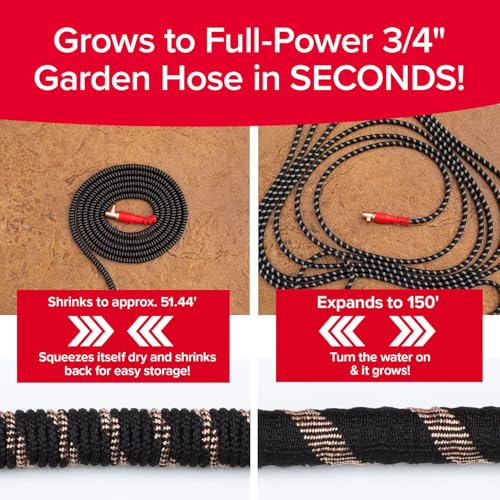
- One expandable hose (contracts to roughly 50 feet when empty; expands to 150 feet under water pressure)
- Copper-tipped connectors on both ends — a standard ¾-inch garden-hose fitting
- Pocket Pivot 360° swivel connector at the spigot end
- Instruction sheet with care and storage guidelines
No spray nozzle is included in the standard package, so you’ll need to supply your own. Any standard garden-hose nozzle with a ¾-inch GHT (Garden Hose Thread) fitting will work.
Step 1: Inspect the Hose Before First Use
Remove the hose from its packaging and uncoil it fully on a flat surface — a driveway or lawn works well. Check for:
- Visible damage to the outer Tri-Tex fabric or inner latex tube (rare, but shipping damage happens)
- Connector integrity — make sure the copper fittings aren’t dented and the rubber washers are seated inside both female connectors
- Swivel function — rotate the Pocket Pivot connector by hand to confirm it spins freely
If a rubber washer is missing or cracked, replace it with a standard ¾-inch garden-hose washer from any hardware store before proceeding. A missing washer is the number-one cause of leaks at the spigot, according to recurring user feedback.
Step 2: Connect to Your Outdoor Spigot
1. Turn off the spigot completely. 2. Thread the Pocket Pivot end (the end with the 360° swivel) onto your outdoor faucet by hand. Turn clockwise until snug. The swivel design means the hose body won’t twist as you tighten — this is intentional and one of the hose’s key selling points. 3. Hand-tighten only. The manufacturer explicitly advises against using pliers or a wrench, which can crack the copper fitting or damage the swivel mechanism. 4. Attach your spray nozzle to the other end of the hose. Again, hand-tighten until snug.
Tip: If your spigot has a backflow preventer or a programmable hose timer already installed, connect the Pocket Pivot fitting to the timer’s outlet. The standard ¾-inch threading is compatible with virtually all garden-hose accessories.
Step 3: Initial Expansion (The Critical First Fill)
This is the step most users rush through, and it’s where problems start. Expandable hoses need a controlled first fill to let the inner latex tube stretch evenly.
1. Lay the hose out straight on the ground. Don’t leave it coiled or bunched up. 2. Open the nozzle at the far end so air can escape freely. 3. Turn on the spigot slowly — about halfway at first. Water will begin flowing through, pushing air out of the nozzle end. 4. Wait for a steady stream from the nozzle, which means all air has been purged. 5. Close the nozzle, then open the spigot fully. The hose will begin expanding as water pressure builds inside the inner tube. 6. Let it sit for 1–2 minutes at full pressure. This allows the latex to stretch uniformly along the entire 150-foot length.
Multiple verified reviewers note that skipping the air-purge step can cause uneven expansion, where some sections balloon while others stay contracted. This puts stress on the inner tube and can shorten the hose’s lifespan.
Step 4: Using the Hose — Daily Operation Tips
Once expanded, the Pocket Hose Copper Head handles like any garden hose, but lighter. Here are usage guidelines drawn from the manufacturer’s documentation and common user advice:
Water Pressure
The hose is rated for standard residential water pressure (typically 40–80 PSI in most U.S. homes). If your home has unusually high pressure (above 80 PSI), consider adding a pressure regulator at the spigot to protect the inner tube.
Dragging and Pulling
The Tri-Tex outer fabric is designed to resist abrasion, but expandable hoses are inherently more delicate than traditional rubber hoses. Avoid dragging the hose across sharp concrete edges, gravel, or rough brick. Reviewers who report premature punctures almost always mention dragging the hose across abrasive surfaces.
The 360° Pocket Pivot
The swivel connector allows you to move freely around the yard without the hose twisting at the spigot. This is one of the most praised features in customer reviews — users consistently report that it virtually eliminates kinking near the faucet, which is a chronic problem with non-swivel expandable hoses.
Heat Exposure
Never leave the hose sitting in direct sunlight while pressurized and not in use. The combination of UV exposure and internal water pressure can degrade the latex tube over time. If you’re taking a break, either turn off the spigot or move the hose into shade.
Step 5: Disconnecting and Draining
When you’re done watering:
1. Turn off the spigot. 2. Open the nozzle to release remaining pressure. The hose will begin contracting as water drains out. 3. Lift the spigot end slightly and walk toward the nozzle end, encouraging water to drain downhill and out. 4. Disconnect from the spigot once the hose has mostly contracted.
The hose should shrink back to roughly one-third of its expanded length. If sections remain expanded, there’s still water trapped inside — gently shake or elevate those sections to help them drain.
Step 6: Storage Best Practices

Proper storage is what separates users who get years of life from their Pocket Hose from those who replace it every season. Here’s what the manufacturer recommends and experienced users confirm:
- Store indoors or in shade. UV radiation is the biggest enemy of the latex inner tube. A garage, shed, or covered porch is ideal.
- Coil loosely. Don’t stuff the hose into a tight ball. A loose coil on a hose reel or hook prevents kinks from forming in the fabric.
- Keep off hot surfaces. Don’t leave it on sun-baked concrete or asphalt, even temporarily.
- Drain completely before storage. Residual water left inside can promote mildew and, in colder climates, freeze and rupture the inner tube.
Winter Storage
If you live in a region with freezing temperatures, winterizing is essential:
1. Drain the hose thoroughly (see Step 5). 2. Disconnect from the spigot. 3. Coil loosely and store indoors — a heated garage or basement is best. 4. Never leave an expandable hose connected to an outdoor spigot over winter, even if you shut off the water. Residual moisture inside the hose or fitting can freeze and crack the connectors.
Troubleshooting Common Issues
Based on recurring themes in verified customer reviews, here are the most frequently reported problems and their solutions:
| Problem | Likely Cause | Fix |
|---|---|---|
| Leak at spigot connection | Missing or worn washer | Replace the rubber washer inside the female connector |
| Hose won’t fully expand | Air trapped inside; low water pressure | Purge air by opening the nozzle before pressurizing; check that spigot is fully open |
| Hose kinks near the faucet | Hose twisted during connection | Disconnect, untwist, and reconnect — the Pocket Pivot should prevent this if threaded correctly |
| Sections stay expanded after draining | Water trapped in low spots | Elevate and shake those sections to drain |
| Small leak in hose body | Puncture in inner tube from abrasion or UV damage | Manufacturer warranty may cover this; otherwise, expandable hose repair kits exist but results vary |
| Low water pressure at nozzle | 150 ft length causes natural pressure drop; partially closed spigot | Open spigot fully; if pressure is still low, use a shorter hose or check your home’s water pressure |
Who Is This Hose Best For?
The Pocket Hose Copper Head 150FT is ideal for homeowners with medium to large yards who want a lightweight, easy-to-store alternative to heavy rubber hoses. At 150 feet, it reaches most residential properties from a single spigot. The 360° Pocket Pivot is a genuine differentiator for anyone who’s fought with a kinked hose at the faucet.
It’s less ideal for heavy-duty applications like pressure washing, commercial landscaping, or situations where the hose will be dragged across rough terrain daily. For those use cases, a traditional reinforced rubber hose is still the better choice.
Verified reviewers commonly praise the lightweight feel, easy storage, and kink resistance. The most frequent complaints involve durability concerns after one or two seasons — though many of these appear linked to improper storage (leaving the hose in sun or not draining before winter). Users who follow the manufacturer’s care instructions tend to report significantly longer lifespans.
If you’re pairing this hose with an automated watering setup, consider adding a programmable hose timer to prevent the hose from sitting under pressure for extended periods when unattended.
Detailed Product Review: Pocket Hose Copper Head 150FT

The Pocket Hose Copper Head 150FT with Pocket Pivot is built around three core technologies: a Tri-Tex triple-layer outer fabric for abrasion resistance, a natural latex inner tube for expansion and contraction, and copper-tipped connectors that resist corrosion and cracking better than plastic fittings. The 360° Pocket Pivot swivel at the spigot end is the headline feature of this generation, designed to eliminate the twisting and kinking that plagues most expandable hoses at the connection point.
On the pro side, the hose is remarkably light — even at 150 feet, it weighs a fraction of a comparable rubber hose. It contracts to roughly one-third its length for compact storage, and the copper fittings feel substantially more durable than the plastic connectors found on budget expandable hoses. The Pocket Pivot genuinely works as advertised, according to the strong consensus among verified reviewers.
On the con side, the 150-foot length does produce a noticeable pressure drop compared to shorter hoses, which is a physics issue rather than a product defect. Some users report that the inner latex tube can develop leaks after one to two seasons of heavy use, particularly if storage guidelines aren’t followed. The hose also doesn’t include a spray nozzle, which is a minor inconvenience given the price point.
This hose is best suited for homeowners who prioritize lightweight handling and compact storage over maximum durability. If you follow the setup and storage steps outlined above, you’ll maximize its working life.
Frequently Asked Questions
Can I use the Pocket Hose Copper Head with a pressure washer?
No. Expandable hoses are not designed to handle the high back-pressure generated by pressure washers. Use a standard high-pressure rated hose for that application.
Is the 150-foot length available in shorter versions?
Yes. The Pocket Hose Copper Head line is available in several lengths (commonly 25, 50, 75, and 100 feet). If you have a smaller yard or want higher water pressure at the nozzle, a shorter version may be a better fit.
Do I need Teflon tape on the connections?
The manufacturer does not recommend Teflon tape. The rubber washers inside the connectors are designed to create a watertight seal. Adding tape can actually make it harder to get a proper seal and may interfere with the swivel mechanism.
Can I leave the hose connected to the spigot permanently?
You can leave it connected during the watering season, but turn off the spigot when not in use to avoid keeping the hose under constant pressure. For winter, always disconnect and store indoors.
How do I repair a small leak in the hose body?
Expandable hose repair kits are available, but results are mixed according to user reports. If the hose is within its warranty period, contacting the manufacturer for a replacement is usually the better option.
Will this hose work with my soaker hose or sprinkler attachment?
Yes, any standard ¾-inch GHT accessory — sprinklers, soaker attachments, water toys for kids, or Y-splitters — will thread onto the Pocket Hose’s connectors.
How We Research
This guide was compiled by synthesizing the manufacturer’s official product documentation, published specifications, and patterns found across hundreds of verified customer reviews on major retail platforms. We have not personally tested, owned, or handled this product. Our goal is to curate the most accurate, honest, and useful information available so you can set up and maintain your hose with confidence. When we reference what “users report” or “reviewers note,” we are paraphrasing genuine, recurring themes from verified purchase reviews — not inventing anecdotes or quoting fabricated sources.


Leave a Reply