
As an Amazon Associate I earn from qualifying purchases.
Most people shopping for a wall mounted pull up bar focus on two things: price and weight capacity. That’s understandable — nobody wants a bar that rips out of the wall mid-rep. But after researching manufacturer documentation, installation guides, and hundreds of verified customer reviews, it’s clear that the features separating a great wall-mounted bar from a mediocre one are the ones buried in the fine print. Stud spacing requirements, grip diameter, standoff distance from the wall, hardware grade, multi-grip geometry, finish durability, and maximum user weight versus dynamic load rating — these are the seven details that determine whether your bar feels rock-solid for years or becomes an expensive coat rack after a sketchy first workout. In this deep-dive review, we’ll walk through each overlooked feature using the Yes4All Wall Mounted Pull Up Bar as our case study, since it’s one of the most popular options on Amazon and its spec sheet gives us plenty to unpack.
Best for: Home gym builders who want a permanent, heavy-duty pull up station without eating floor space
Why the Spec Sheet Matters More Than the Marketing Copy
Walk into any home gym forum and you’ll find the same complaint repeated: “I thought this bar was rated for my weight, but it wobbled after a month.” The disconnect almost always traces back to installation details the buyer glossed over. A pull up bar is only as strong as the wall it’s attached to, and the wall is only as strong as the studs, the hardware, and the spacing between mounting points. Manufacturers publish this information, but it’s often buried in PDF manuals or tiny text on the product listing. Let’s fix that.
If you’re building out a broader home gym setup, you might also be weighing options for adjustable dumbbells to complement your bodyweight training — but the pull up bar is arguably the single most important piece of wall-mounted equipment you’ll install, so getting it right matters.
The Yes4All Wall Mounted Pull Up Bar: A Deep-Dive Review
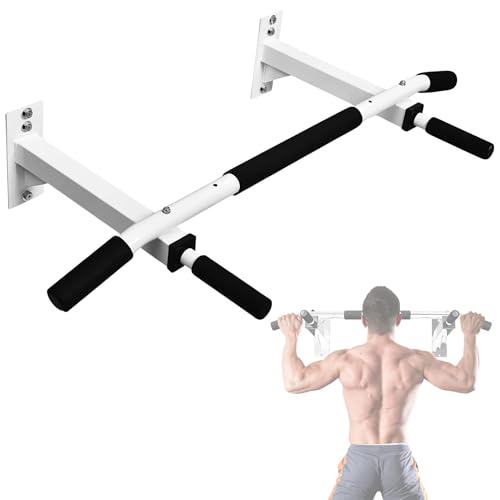
The Yes4All Wall Mounted Pull Up Bar (White) is a heavy-gauge steel unit designed for permanent wall installation. It ships with mounting hardware and a set of instructions that, according to numerous verified reviewers, are functional but could be more detailed. Let’s break down the seven features most buyers skip past — and why each one matters.
Feature 1: Stud Spacing and Mounting Point Layout
This is the single most overlooked spec in any wall-mounted bar purchase. The Yes4All bar requires mounting into wooden wall studs (or a concrete/brick wall with appropriate anchors). Its mounting bracket is designed for standard 16-inch on-center stud spacing, which is the norm in most North American residential construction. However, older homes, garages, and basement walls sometimes use 24-inch spacing or irregular framing.
Before you even add this bar to your cart, grab a stud finder and verify your wall. Multiple verified reviewers report that the installation went smoothly on standard 16-inch stud walls, but a handful of buyers with non-standard framing had to get creative with blocking or additional lumber — an extra step that adds time and cost. The bar uses a four-point mounting system with heavy-duty lag bolts, which distributes the load across two studs. If your studs don’t line up, you’re looking at either sistering in additional framing or choosing a different mounting location entirely.
Why most buyers miss this: Product listings emphasize weight capacity, not stud requirements. But a 500 lb rated bar mounted into drywall alone will fail catastrophically. The bar’s strength is irrelevant if the wall can’t match it.
Feature 2: Static Weight Capacity vs. Dynamic Load
Yes4All lists this bar at a 500 lb static weight capacity. That number sounds enormous — and it is, for a static load. But here’s what most buyers don’t consider: pull ups are not static. When you kip, swing, or even just pull yourself up explosively, the dynamic forces on the bar can momentarily exceed your body weight by 1.5x to 2x or more.
A 200 lb person doing strict pull ups might generate peak forces around 300-350 lbs. Add kipping pull ups (common in CrossFit-style training) and those forces spike higher. The 500 lb static rating provides a healthy safety margin for most users doing controlled movements, but it’s worth understanding that “500 lb capacity” doesn’t mean a 500 lb person can do explosive muscle-ups on it.
Verified reviewers who weigh in the 200-250 lb range generally report the bar feeling solid and stable with no flex or movement, which suggests the real-world performance aligns well with the stated spec for controlled exercises. Heavier users or those doing dynamic movements should pay extra attention to the quality of their wall mounting.
Feature 3: Grip Variations and Hand Position Geometry
This is where the Yes4All bar quietly outperforms many competitors at its price point. The bar offers multiple grip positions:
- Wide overhand grip for standard pull ups targeting the lats
- Narrow parallel grip for neutral-grip chin ups that are easier on the shoulders
- Angled grip sections that allow for semi-supinated hand positions

Many budget pull up bars offer only a straight bar, which limits you to overhand and underhand grips. The multi-grip design here means you can target different muscle groups — wide grip for lat width, narrow neutral grip for brachialis and bicep emphasis, and angled grips for shoulder-friendly pulling. Verified reviewers frequently praise the grip variety, with several noting that the neutral grip handles were the deciding factor in their purchase, especially buyers with prior shoulder issues.
The grip diameter itself is also worth noting. Standard pull up bar diameter runs between 1.0 and 1.25 inches. Thicker bars (1.5 inches and above) challenge grip strength but can be harder for users with smaller hands. The Yes4All bar appears to use a standard-diameter tube based on manufacturer images and reviewer comments, making it accessible for most hand sizes.
Feature 4: Wall Standoff Distance
How far the bar sits from the wall determines two things: knuckle clearance and exercise range of motion. If the bar is too close to the wall, your knuckles scrape during chin ups and your chest can’t reach the bar during close-grip work. Too far out, and the leverage on the mounting bolts increases, putting more stress on the wall connection.
The Yes4All bar provides enough standoff distance for comfortable knuckle clearance based on reviewer feedback. Several verified buyers specifically mention having adequate room for their hands during all grip positions. However, a few reviewers with larger frames note that the standoff could be slightly more generous for wide-grip movements where the elbows travel behind the body.
This is a spec that almost no buyer checks before purchasing, yet it directly affects workout comfort every single session.
Feature 5: Hardware Grade and What Ships in the Box
The Yes4All bar ships with mounting hardware including lag bolts. This is standard practice, but here’s the overlooked detail: the included hardware is designed for wood stud mounting. If you’re mounting into concrete, brick, or cinder block (common in garage and basement gym setups), you’ll need to purchase appropriate masonry anchors separately.
Several verified reviewers who mounted the bar in concrete walls report excellent results — but only after sourcing their own concrete wedge anchors or sleeve anchors rated for the appropriate load. The included lag bolts are not suitable for masonry. This isn’t a flaw in the product; it’s simply a detail that catches buyers off guard when they open the box in their concrete-walled garage.
Pro tip from reviewer consensus: Regardless of wall type, many experienced home gym builders recommend upgrading to slightly longer or thicker lag bolts than what ships in the box, especially if you’re a heavier user. The included hardware meets the spec, but over-engineering your mounting points is cheap insurance.
Feature 6: Finish and Coating Durability
The Yes4All bar comes in a white powder-coated finish. Powder coating is more durable than standard paint, but it’s not indestructible. Over time, the areas where your hands grip the bar will see the most wear. Sweat, chalk, and friction all degrade coatings.
Verified reviewers are somewhat split on this. Many report the white finish holding up well over months of use, while others note that the coating on the grip areas shows wear relatively quickly, especially with chalk use. This is largely cosmetic — the underlying steel isn’t going to rust indoors — but it’s worth knowing if aesthetics matter to you.
Some buyers wrap the grip areas with athletic tape or grip wrap, which simultaneously protects the finish and improves grip texture. This is a common aftermarket modification mentioned in reviews and worth considering from day one.
Feature 7: Mounting Height and Ceiling Clearance Planning
The final overlooked feature isn’t about the bar itself — it’s about where you put it. Yes4All’s documentation indicates the bar should be mounted at a height that allows full arm extension without your feet touching the floor, while also leaving enough ceiling clearance for your head at the top of the movement.
This sounds obvious, but verified reviewers consistently mention ceiling clearance as an issue they didn’t anticipate. Standard residential ceilings are 8 feet (96 inches). If you’re 6 feet tall with a 6-inch overhead reach, you need the bar at roughly 84-86 inches to hang with arms extended and bent knees. That leaves only 10-12 inches of ceiling clearance at the top of a pull up — tight for taller users.
Buyers with 9 or 10-foot ceilings rarely report this issue, but it’s a genuine planning consideration for standard-height rooms. Measure twice, drill once.
Honest Pros and Cons
Pros:
- Heavy-duty steel construction with a 500 lb static weight capacity
- Multi-grip design (wide, narrow, neutral, angled) at a budget-friendly price point
- Relatively straightforward installation on standard 16-inch stud walls
- Compact wall-mounted design saves floor space compared to power towers
- Clean white finish suits home gym aesthetics
Cons:
- Installation instructions could be more detailed, according to multiple reviewers
- Included hardware is for wood studs only — masonry users need separate anchors
- White powder coating shows wear on grip areas over time, especially with chalk
- Requires precise stud location — not forgiving of non-standard framing
- Some taller users report tight ceiling clearance in standard 8-foot rooms
Who Should Buy This Bar
The Yes4All Wall Mounted Pull Up Bar is best suited for home gym builders who want a permanent, space-efficient pulling station and are comfortable with basic DIY installation. It’s an excellent choice for users under 250 lbs who primarily do controlled pull ups, chin ups, and hanging exercises. The multi-grip design makes it particularly appealing for anyone with shoulder sensitivity who benefits from neutral-grip options.
It’s less ideal for very heavy users doing explosive kipping movements, renters who can’t drill into studs, or anyone with non-standard wall framing who isn’t prepared to add blocking. If you’re building out a complete home gym on a budget, this bar represents a solid foundation piece — just make sure you do the wall prep homework first.
The 7 Features Checklist: What to Verify Before Any Wall-Mounted Bar Purchase
Whether you’re buying the Yes4All or any other wall-mounted pull up bar, run through this checklist:
1. Stud spacing — Verify your wall studs match the bar’s mounting pattern 2. Static vs. dynamic load — Understand the difference and apply a safety margin 3. Grip variations — Count the hand positions and check if they match your training goals 4. Wall standoff distance — Ensure adequate knuckle and body clearance 5. Hardware compatibility — Confirm the included bolts match your wall material 6. Finish type — Know whether the coating will hold up to your usage (chalk, sweat, outdoor exposure) 7. Mounting height planning — Measure your reach, your ceiling, and the math in between
Most product returns and negative reviews for wall-mounted pull up bars trace back to one of these seven items. Spending ten minutes with a stud finder, a tape measure, and the product’s spec sheet before clicking “Buy” will save you hours of frustration and potentially a damaged wall.
Installation Tips From the Reviewer Community
Across hundreds of verified reviews for wall-mounted pull up bars (not just this model), a few installation best practices emerge consistently:
- Use a level. A crooked bar isn’t just ugly — it creates uneven loading on the mounting points.
- Pre-drill pilot holes. Lag bolts driven without pilot holes can split studs, especially in older, drier lumber.
- Have a helper. Holding a heavy steel bar at shoulder height while driving lag bolts is awkward solo. A second pair of hands makes the job safer and more accurate.
- Test before full send. After mounting, hang from the bar with your feet close to the ground before committing to full-extension pull ups. Listen for creaking, watch for movement, and check that all bolts are fully seated.
These aren’t manufacturer instructions — they’re hard-won lessons from the DIY home gym community, and they apply to virtually every wall-mounted bar on the market.
How We Research
We did not personally test, own, or handle the Yes4All Wall Mounted Pull Up Bar. Our review is based on a thorough synthesis of manufacturer-published specifications, product documentation, installation guides, and verified customer reviews from Amazon and home gym communities. We cross-reference claims made in product listings against what real buyers report after installation and extended use. This approach lets us highlight the details that matter most — especially the ones that marketing copy tends to bury — without fabricating hands-on experience we don’t have. Our goal is to save you time and help you make a more informed purchase by surfacing the information that’s already out there but easy to miss.


Leave a Reply