As an Amazon Associate I earn from qualifying purchases.
When you shop for an outdoor patio dining set for 6, the number on the price tag is only the beginning. Between seasonal maintenance supplies, a patio umbrella to make the set actually usable in summer, potential replacement hardware, and the hidden cost of a set that doesn’t last, the true price of outdoor dining can be 30–60 percent higher than the sticker. This guide breaks down every dollar you should expect to spend over the realistic lifespan of a 6-person HDPE patio dining set — using manufacturer specifications, material science, and verified customer feedback — so you can budget honestly before you buy.
Best for: Families and frequent entertainers who want a low-maintenance, weather-resistant outdoor dining solution
Why “True Cost” Matters for Outdoor Furniture
Indoor furniture lives a sheltered life. Outdoor furniture fights UV radiation, rain, humidity, temperature swings, pollen, bird droppings, and the occasional windstorm. A dining set that looks like a bargain in April can become a money pit by October if the materials can’t handle the elements. That’s why we focus on total cost of ownership (TCO) — the sum of every expense from unboxing day through the realistic end of the product’s useful life.
If you’ve read our true-cost breakdown of cordless electric pruning shears, you know the pattern: the purchase price is often less than half the story. The same principle applies here, arguably even more so because patio furniture is a larger upfront investment and sits exposed to the weather year-round.
Understanding HDPE as a Material
HDPE — high-density polyethylene — has become the gold standard for outdoor furniture that mimics the look of painted wood without the maintenance headaches. Here’s why it matters for your wallet:
- UV-stabilized: Manufacturer specs for quality HDPE furniture typically cite UV inhibitors that resist fading and cracking. Unlike wood, HDPE won’t need annual staining or sealing.
- Moisture-proof: HDPE doesn’t absorb water, so it won’t rot, warp, or develop mildew the way pine or even cedar can.
- Recyclable: Many HDPE sets are made partly from recycled material, and the furniture itself is recyclable at end of life.
- No painting or sanding: The color runs through the entire board, so scratches don’t expose a different-colored substrate.
The trade-off? HDPE sets tend to carry a higher sticker price than aluminum-and-sling or resin-wicker alternatives. The question is whether the lower maintenance costs and longer lifespan justify that premium. Let’s find out.
The SERWALL 6-Person HDPE Patio Dining Set: Full Review

What You Get in the Box
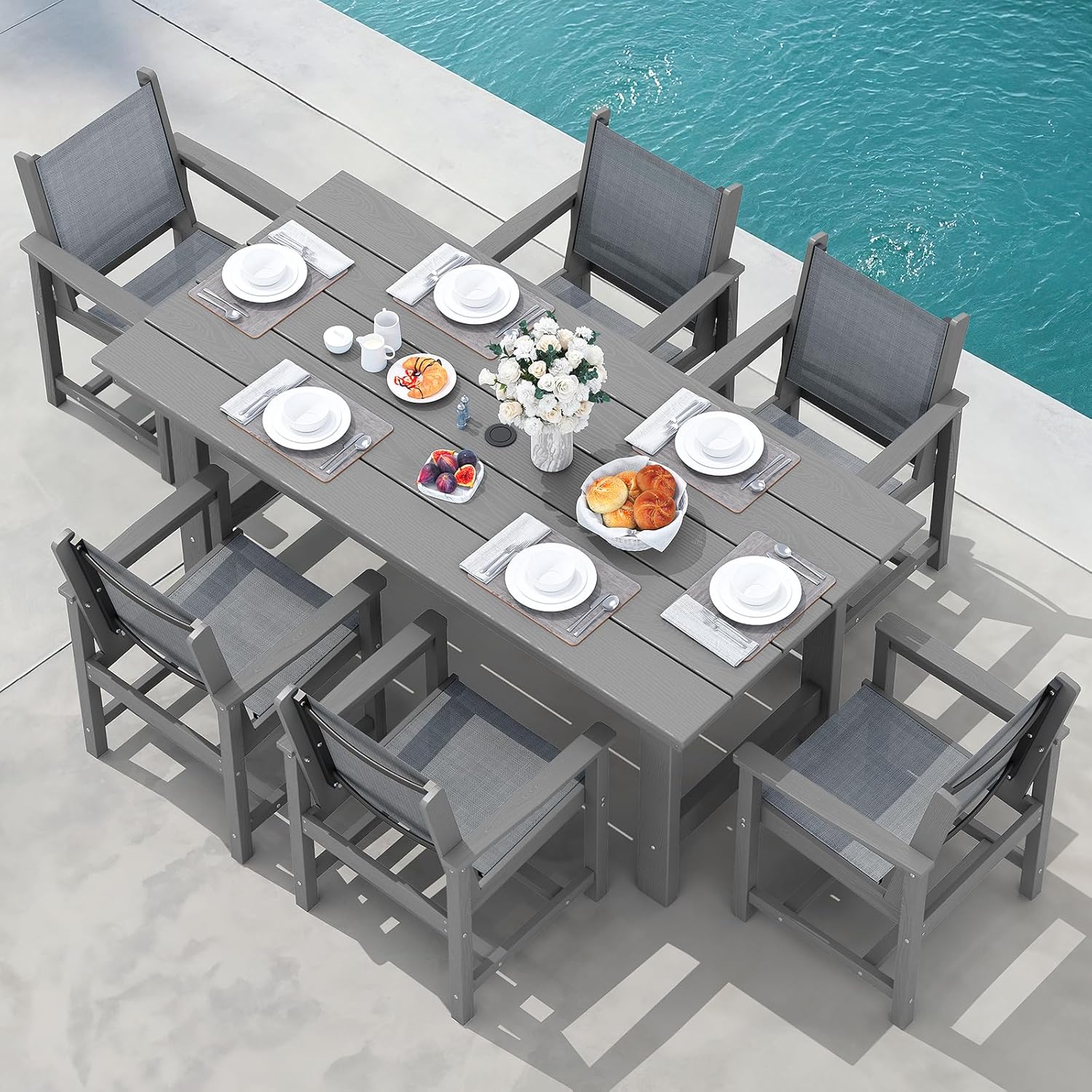
The SERWALL Patio Dining Set for 6 ships with one rectangular HDPE table featuring a built-in umbrella hole cut-out and six woven dining chairs in a gray finish. The table is designed to seat six adults comfortably, and the umbrella hole means you can add shade without needing a separate side table or freestanding umbrella base.
The chairs use a woven design that provides some flex and breathability — a welcome feature during hot-weather dining. According to the manufacturer, the HDPE lumber used in the table is weather-resistant, fade-resistant, and requires no painting, staining, or waterproofing.
Assembly and First Impressions
Verified customer reviews consistently note that assembly is a two-person job and takes roughly 2–3 hours for the full set. The hardware is included, and most reviewers report that the pre-drilled holes align well. A few customers mention that having a power drill on hand speeds things up significantly. The most common complaint during assembly is the sheer number of pieces — six chairs plus a table means a lot of bolts.

Build Quality and Durability
The HDPE table surface is the star here. Reviewers praise its solid feel and resistance to staining from food and drinks. The gray color is described as neutral enough to complement most patio décor. The woven chairs receive generally positive marks for comfort during meals, though some reviewers note they wouldn’t choose them for extended lounging sessions — these are dining chairs, not recliners.
Several verified reviews mention that the set has held up well through multiple seasons of use, including exposure to rain, snow, and intense sun. The HDPE material shows minimal fading according to customers who have owned the set for over a year. A small number of reviewers have reported minor issues with hardware loosening over time, which is easily addressed with a wrench during seasonal check-ups.
Honest Pros and Cons
Pros:
- HDPE construction means virtually zero annual maintenance beyond cleaning
- Built-in umbrella hole adds functionality without extra cost
- Woven chairs offer breathability in warm weather
- Neutral gray finish works with most outdoor aesthetics
- Seats six comfortably for dining
Cons:
- Assembly is time-consuming (plan for a full afternoon)
- Chairs are functional for dining but not designed for long lounging
- Some reports of hardware loosening after the first season
- The set is heavy, which is good for wind resistance but bad for rearranging
Who Should Buy This Set
This set is ideal for families or couples who entertain regularly and want a durable, low-maintenance outdoor dining solution. If you’re tired of re-staining a wooden set every spring or replacing a cheap resin set every two years, the HDPE construction offers a compelling middle ground. It’s also a strong choice for anyone in a climate with harsh weather swings — the material handles freeze-thaw cycles and intense UV without the degradation you’d see in wood or basic plastic.
Breaking Down the True Cost of Ownership
Now let’s get to the numbers. We’ll walk through every cost category you should budget for over a realistic 7–10 year ownership period, which is the lifespan range commonly cited for quality HDPE outdoor furniture.
1. The Sticker Price
The purchase price of the SERWALL set is your largest single expense. We don’t quote live prices here (they fluctuate), so click the button above to check the current number on Amazon. What we can say is that HDPE dining sets for six generally sit in a higher price bracket than comparable aluminum-sling or resin-wicker sets. You’re paying a material premium — think of it as pre-paying years of maintenance you won’t have to do.
2. Seasonal Maintenance Costs
This is where HDPE shines compared to wood. Here’s a realistic annual maintenance budget:
| Maintenance Task | Frequency | Estimated Annual Cost |
|---|---|---|
| Mild soap + water cleaning | 3–4 times/season | ~$5 (dish soap you already own) |
| Hardware tightening check | Once per spring | $0 (wrench from your toolbox) |
| Furniture covers (optional) | Replace every 2–3 years | ~$15–25/year amortized |
| Mildew/pollen deep clean | Once per spring | ~$5–10 (oxygen-based cleaner) |
Estimated annual maintenance: $10–40
Compare that to a wood dining set, where annual staining or sealing alone can run $50–100 in materials, plus several hours of labor. Over a decade, the maintenance savings on HDPE can easily reach $400–800 versus a comparable wood set. This is the same principle we explored in our brushless cordless lawn mower buying guide — sometimes the higher upfront cost is the cheaper long-term choice.
3. Umbrella and Shade Add-Ons
The SERWALL set includes an umbrella hole cut-out in the table, which is a genuine cost-saver — you don’t need a separate umbrella stand or side table. However, the umbrella itself is not included. Here’s what to budget:
- Patio umbrella (7.5–9 ft): Typically ranges from $30 for a basic model to $150+ for a cantilever or wind-resistant version. A mid-range market umbrella with UV-protective fabric is the sweet spot for most buyers.
- Umbrella base: If the table’s hole doesn’t provide enough stability (especially in windy areas), a weighted base runs $20–60.
- Replacement umbrella fabric or full umbrella: Even UV-treated umbrella fabric fades and weakens over 3–5 seasons. Budget for one replacement over a decade.
Estimated umbrella cost over 10 years: $80–250
4. Replacement Parts and Hardware
One of the underappreciated costs of outdoor furniture is replacement hardware. Bolts, screws, and brackets are exposed to moisture and temperature cycling, which can cause corrosion or loosening even on stainless-steel fasteners. Based on verified customer feedback:
- Some owners report needing to replace a few bolts after 2–3 seasons (~$5–10 at a hardware store)
- Woven chair seats may eventually need re-tightening or, in rare cases, re-weaving. SERWALL’s customer service reputation, based on reviews, appears responsive, but replacement woven panels (if needed) could run $20–40 per chair from third-party sources.
- HDPE lumber itself is extremely unlikely to need replacement within the first decade under normal use.
Estimated replacement parts over 10 years: $10–50 (hardware only) to $50–250 (if chair weaving needs attention)
5. Furniture Covers and Winter Storage
While HDPE can technically stay outside year-round, using covers extends the life of hardware and keeps the set clean. A quality 6-piece patio furniture cover set runs $40–80 and typically lasts 2–4 seasons before UV damage degrades the cover fabric itself.
Estimated cover cost over 10 years: $100–300
If you have garage or shed space, storing chairs indoors during winter eliminates the need for covers but introduces the labor cost of moving heavy HDPE chairs multiple times per year.
6. Opportunity Cost: What You’re NOT Spending
Here’s a cost most guides ignore. If you bought a cheaper resin or steel-frame set that lasts 3–4 years, you’d need to purchase 2–3 sets over the same decade. Even at a lower per-set price, the cumulative cost — plus the hassle of disposal and re-assembly — often exceeds the one-time investment in HDPE. Factor in the environmental cost of sending multiple sets to a landfill, and the value proposition becomes even clearer.
The 10-Year TCO Summary
Here’s the full picture, using conservative-to-moderate estimates:
| Cost Category | Low Estimate | High Estimate |
|---|---|---|
| Purchase price | Check current price | Check current price |
| Annual maintenance (×10) | $100 | $400 |
| Umbrella + base + replacement | $80 | $250 |
| Replacement hardware/parts | $10 | $250 |
| Furniture covers | $100 | $300 |
| Total add-on costs over 10 years | $290 | $1,200 |
The takeaway: plan to spend an additional $290–$1,200 beyond the sticker price over a decade of ownership. The low end assumes a mild climate, minimal wind, and basic maintenance. The high end assumes harsh weather, full cover replacement cycles, and some chair-weave repairs.
Tips to Minimize Your Total Cost
1. Clean regularly. A 10-minute wipe-down after pollen season and before winter prevents buildup that’s harder (and more expensive) to remove later. 2. Tighten hardware every spring. Five minutes with a wrench prevents wobble that stresses joints and leads to cracks. 3. Buy a quality umbrella the first time. A cheap umbrella that shreds in the first windstorm costs more in the long run than a mid-range model with a wind vent. 4. Use covers or store chairs in winter. This single habit can add years to the life of your hardware and chair weaving. 5. Keep the original hardware list. If you need replacement bolts, knowing the exact size saves a trip to the hardware store.
How Does HDPE Compare to Other Materials?
| Feature | HDPE | Wood (Teak/Acacia) | Aluminum + Sling | Resin Wicker |
|---|---|---|---|---|
| Upfront cost | Higher | High (teak) / Moderate (acacia) | Moderate | Low–Moderate |
| Annual maintenance | Very low | High (staining, sealing) | Low | Low–Moderate |
| Lifespan | 10–20+ years | 10–25 years (with maintenance) | 5–10 years | 3–7 years |
| Weather resistance | Excellent | Good (teak) / Fair (acacia) | Good | Fair |
| Weight | Heavy | Heavy | Light | Light–Moderate |
| Eco-friendliness | Recyclable, often recycled content | Renewable but resource-intensive | Recyclable | Rarely recyclable |
HDPE’s sweet spot is the combination of low maintenance and long lifespan. If you’re willing to invest the upfront cost, it’s one of the most cost-effective materials over a full ownership cycle.
Frequently Asked Questions
Can HDPE furniture stay outside in winter?
Yes. HDPE is engineered to handle freeze-thaw cycles without cracking. However, using covers or storing chairs indoors protects the hardware and keeps the set cleaner for spring.
Does the umbrella hole weaken the table?
The SERWALL table’s umbrella hole is a factory cut-out, meaning the surrounding material is designed to handle the stress. Verified reviews don’t report cracking around the hole as a common issue.
How heavy is the set?
HDPE furniture is notably heavier than aluminum or resin alternatives. This is actually a benefit in windy conditions — the set stays put — but it makes rearranging or storing the furniture more labor-intensive.
Is HDPE furniture hot to sit on in direct sun?
Like any dark-colored outdoor material, HDPE can absorb heat. The gray color of the SERWALL set is lighter than black or dark brown options, which helps. Seat cushions (an optional add-on, typically $15–30 per chair) solve this entirely.
What cleaning products should I avoid?
Avoid abrasive cleaners, bleach, and pressure washers on high settings. A soft brush with mild dish soap and water is all you need for routine cleaning. For stubborn stains, an oxygen-based cleaner (like OxiClean) is safe for HDPE.
Product Comparison Card
Final Verdict
The SERWALL 6-Person HDPE Patio Dining Set represents a strong long-term investment for anyone serious about outdoor dining. The HDPE construction dramatically reduces the annual maintenance burden compared to wood, and the built-in umbrella hole saves you the cost of a separate umbrella stand. Yes, you’ll spend additional money on an umbrella, covers, and occasional hardware over the years — but those costs are modest compared to the cycle of buying and replacing cheaper sets.
If you budget for the full cost of ownership rather than just the sticker price, you’ll make a smarter purchase and enjoy stress-free outdoor meals for years to come. Much like our true-cost analysis of the Milwaukee M18 Fuel Circular Saw, the lesson is the same: quality materials and honest budgeting beat a low price tag every time.
How We Research
This article is based on publicly available manufacturer specifications, product documentation, and a thorough analysis of verified customer reviews from major retail platforms. We synthesize this information to provide an honest, comprehensive buying guide. We have not personally tested, owned, or handled the products reviewed here. Our goal is to save you time by curating the most relevant and trustworthy information available, presented transparently so you can make a confident purchasing decision.


Leave a Reply