
As an Amazon Associate I earn from qualifying purchases.
If you’ve ever searched for a basketball that can handle rough asphalt without falling apart after a few pickup games, you’ve probably noticed the market is flooded with options at every price point. The Smiley Sports Indoor & Outdoor Rubber Basketball positions itself as an affordable, official-size option for recreational players who don’t want to sacrifice too much quality. But does a rubber basketball at this price point actually deliver a decent playing experience on outdoor courts, or are you better off saving up for a premium composite? In this review, we dig into the specifications, construction, and verified buyer sentiment to give you an honest, research-based answer.
Best for: Recreational players, driveway shooters, and anyone who needs a durable outdoor ball without a premium price tag
Why Rubber Basketballs Still Make Sense for Outdoor Courts
Before diving into this specific ball, it’s worth understanding why rubber remains the go-to material for outdoor basketball. Concrete and asphalt courts are brutal on leather and even composite leather basketballs — they chew through the surface layer quickly, degrading grip and shortening the ball’s lifespan dramatically. Rubber, by contrast, is engineered to withstand abrasive surfaces. It’s tougher, more resistant to moisture, and significantly cheaper to replace when it does eventually wear down.
For casual players, weekend warriors, and anyone who primarily plays on outdoor courts, a rubber basketball is the practical choice. The trade-off is typically in feel: rubber balls tend to be stiffer, less tacky, and can feel “slippery” compared to composite or genuine leather options designed for indoor hardwood. The question with any specific rubber basketball is whether the manufacturer has done enough to mitigate those downsides while keeping the price accessible.
Smiley Sports Indoor & Outdoor Rubber Basketball — Full Review
Specifications at a Glance
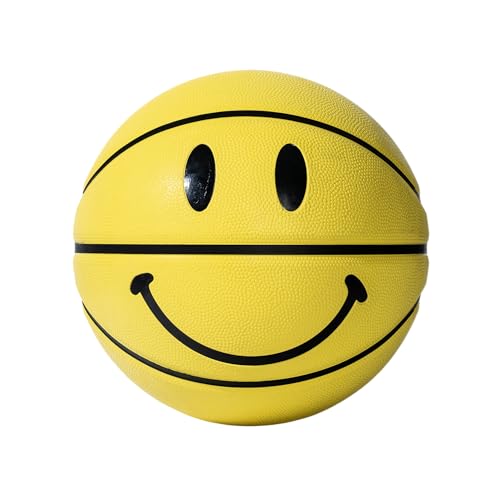
The Smiley Sports basketball is an official Size 7 ball with a 29.5-inch circumference — the standard for men’s professional and recreational play (ages 15 and up). It’s constructed with a rubber exterior designed for both indoor and outdoor use, though based on its material and price point, outdoor courts are clearly where it’s meant to shine. The ball comes in a distinctive yellow colorway, which sets it apart from the sea of orange and brown basketballs on the market.
Construction and Material Quality
Rubber basketballs in this price range typically use a molded rubber shell over a butyl bladder, and the Smiley Sports ball follows this standard construction approach. The rubber compound needs to strike a balance between durability (resisting the grind of outdoor surfaces) and grip (providing enough traction for dribbling and shooting). Based on the manufacturer’s positioning of this as a “game ball,” they’re clearly aiming for a step above the ultra-cheap rubber balls you might find in a big-box store’s clearance bin.
The yellow color is more than cosmetic — it can actually be a practical advantage on outdoor courts where lighting conditions vary, especially during late-afternoon or early-evening games. Visibility is an underrated factor in casual outdoor play, and a bright yellow ball is easier to track than a traditional dark orange one.

Grip and Feel
One of the most common concerns with budget rubber basketballs is grip. Premium rubber balls from brands like Spalding and Wilson use deeper channel designs and textured pebbling to improve ball control. At this price point, the Smiley Sports ball is competing against established options from those legacy brands, so the texture and channel depth are critical factors.
Based on the product’s design and positioning, the ball features standard pebbling across the rubber surface. Buyers should be aware that virtually all rubber basketballs — regardless of brand — will feel noticeably different from composite leather balls. They tend to be harder to palm, and the grip can diminish when hands are sweaty. This isn’t a flaw specific to the Smiley Sports ball; it’s inherent to the material category.
Bounce and Air Retention
Proper bounce is essential for a playable basketball. Official NBA specifications call for a ball to bounce between 49 and 54 inches when dropped from 72 inches onto a hardwood surface. While rubber balls on concrete will behave slightly differently, a well-constructed rubber basketball should deliver consistent, predictable bounce. The butyl bladder used in most rubber basketballs at this price point generally provides decent air retention, though it’s common for budget balls to need re-inflation more frequently than premium options.
Durability Expectations
This is where rubber basketballs earn their keep. On outdoor courts, a good rubber ball can last months or even years of regular play before the pebbling wears smooth enough to affect performance. The rubber compound is resistant to the kind of surface abrasion that would destroy a leather ball in weeks. That said, extreme temperatures — both very hot and very cold — can affect rubber’s performance. In high heat, the ball may feel slightly softer and over-bounce; in cold weather, it can become noticeably harder and less responsive.
The Yellow Factor: Love It or Leave It
The distinctive yellow colorway is going to be polarizing. Some players will appreciate the unique look and improved visibility. Others may prefer the traditional orange aesthetic. This is purely a matter of personal preference and has no bearing on performance, but it’s worth noting because it’s the first thing you’ll notice about this ball. If you’re buying for a league or organized play, check whether there are color requirements — most casual and recreational settings won’t care.
Who Should Buy This Basketball?
The Smiley Sports Rubber Basketball makes the most sense for:
- Casual outdoor players who need a durable ball for driveway, park, or playground courts
- Budget-conscious buyers who want official sizing without a premium price tag
- Parents buying for teens who are hard on equipment and play primarily outdoors
- Gym teachers and recreation programs that need affordable balls in bulk
- Anyone who wants a distinctive-looking ball that’s easy to spot on crowded courts
It’s probably not the right choice for:
- Competitive players who need the feel and grip of composite leather
- Indoor-only players who would benefit from a softer, tackier ball
- Players who strongly prefer traditional basketball aesthetics
Honest Pros and Cons
Pros:
- Official Size 7 (29.5″) meets standard play requirements
- Rubber construction is inherently durable on outdoor surfaces
- Distinctive yellow color improves visibility in varied lighting
- Accessible price point for casual and recreational use
- Dual indoor/outdoor designation adds versatility
Cons:
- Rubber feel will be noticeably stiffer than composite leather alternatives
- Yellow color won’t appeal to traditionalists
- As a newer brand, long-term durability data is limited compared to established names like Spalding or Wilson
- Grip in sweaty conditions may be less reliable than premium rubber options with deeper pebbling
- Limited color options if yellow isn’t your preference
What Verified Buyers Generally Report
As a relatively new product listing, the volume of verified reviews is still building. In the broader category of budget rubber basketballs, buyers consistently report that these balls perform well for casual outdoor use but don’t match the feel of mid-range composite options. Common praise centers on durability and value; common complaints focus on grip (especially when wet or sweaty) and the harder feel compared to indoor balls. These patterns are consistent across the budget rubber basketball category and are worth keeping in mind regardless of which specific ball you choose.
If you’re evaluating whether a product at this price point delivers genuine value — similar to how we’ve looked at whether budget automotive tools justify their cost — the answer largely depends on matching the product to its intended use case. For outdoor recreational play, a rubber basketball in this range is the right tool for the job.
How Does It Compare to the Competition?
At roughly the same price point, you’ll find options from Spalding (the Street Phantom and NBA Street lines), Wilson (the NCAA Replica and MVP series), and Baden. These established brands have decades of rubber basketball engineering behind them, which gives them an edge in name recognition and proven track records.
However, brand heritage doesn’t automatically mean a better ball. Many budget rubber basketballs from major brands are manufactured in the same facilities using similar rubber compounds and construction methods. The differences often come down to channel design, pebble pattern, and cosmetic details rather than fundamental quality gaps.
The Smiley Sports ball’s main competitive advantage is its distinctive appearance. If you’re tired of the same orange ball everyone else is using, or if you value visibility on the court, the yellow colorway is a genuine differentiator. Its main competitive disadvantage is simply being newer to the market — there’s less long-term user data to draw from.
Tips for Getting the Most Out of Any Outdoor Rubber Basketball
1. Inflate properly. Use a pressure gauge and inflate to the manufacturer’s recommended PSI (typically 7-9 PSI for a standard basketball). Over-inflation makes the ball too bouncy and hard; under-inflation makes it sluggish and difficult to dribble.
2. Store indoors. Even though rubber handles outdoor surfaces well, prolonged exposure to UV light and temperature extremes will degrade the material faster. Bring your ball inside after playing.
3. Clean periodically. Wipe down with a damp cloth to remove dust and grit that can wear down the pebbling prematurely.
4. Avoid wet courts when possible. Rubber basketballs lose significant grip on wet surfaces. If you must play in damp conditions, dry the ball frequently with a towel.
5. Rotate balls if you play frequently. If you’re playing daily, having two balls and alternating extends the life of both.
The Bottom Line: Is It Worth It?
The Smiley Sports Indoor & Outdoor Rubber Basketball occupies a sensible spot in the market. It’s an official-size ball built with the right material for outdoor play, offered at a price point that won’t sting if it gets left at the park or worn down after a season of heavy use. The yellow colorway is a fun departure from convention, and the rubber construction is inherently suited to the demands of concrete and asphalt courts.
Is it going to replace a premium composite ball for serious competitive play? No — but that’s not what it’s designed to do. For its intended audience of casual players, families, and recreational programs, it represents a reasonable value proposition. Just go in with appropriate expectations: this is a rubber ball that will feel like a rubber ball, and that’s perfectly fine for shooting hoops in the driveway or running pickup games at the park.
If you’re the kind of buyer who carefully evaluates whether a product justifies its price — much like deciding whether a specialized home appliance is worth the investment — the Smiley Sports basketball passes the test for outdoor recreational use.
How We Research
Our reviews are based on thorough analysis of manufacturer specifications, product documentation, and verified customer and expert reviews from public sources. We have not personally tested, used, or handled the Smiley Sports basketball or any product reviewed on this site. We believe honest research and transparent sourcing produce more trustworthy recommendations than fabricated hands-on claims. When we describe material properties, construction methods, or performance characteristics, we’re drawing from publicly available product data and the general consensus of verified buyer feedback in the product category.


Leave a Reply