
As an Amazon Associate I earn from qualifying purchases.
The Sony Alpha 7R VI represents a landmark moment in mirrorless camera engineering: a 66.8-megapixel full-frame sensor built on a fully stacked architecture, paired with blackout-free electronic viewfinder shooting at up to 30 frames per second. On paper, it sounds like the camera that finally eliminates the traditional compromise between resolution and speed. But at roughly $4,498 for the body alone, the Alpha 7R VI demands serious financial commitment — and that’s before you factor in the cost of lenses, memory cards, and storage infrastructure capable of handling files this large. So the real question isn’t whether the specs are impressive (they are), but whether the real-world performance justifies the investment for your specific shooting needs. This article synthesizes manufacturer specifications, expert analysis, and verified customer feedback to give you an honest, thorough answer.
Best for: Professional landscape, studio, and wildlife photographers who need both extreme resolution and fast burst shooting
What Makes the Alpha 7R VI Different from Its Predecessors?
Sony’s Alpha 7R line has always been the resolution king of the full-frame mirrorless world. The 7R V, released in late 2022, brought a 61 MP sensor with AI-based autofocus and impressive dynamic range. But it used a conventional back-illuminated sensor design, which meant burst speeds topped out at 10 fps with the mechanical shutter — respectable, but nowhere near what action and wildlife photographers needed.
The Alpha 7R VI changes the equation fundamentally by moving to a fully stacked CMOS sensor. Previously, Sony reserved stacked sensor technology for its speed-oriented bodies like the Alpha 1 and Alpha 9 III. A stacked sensor places the processing circuitry directly behind the photodiodes on a separate layer, dramatically increasing readout speed. The practical result: the 7R VI can shoot at up to 30 fps with its electronic shutter while maintaining full 66.8 MP resolution, and it does so with a blackout-free viewfinder experience — meaning the EVF image never goes dark between frames.
This is a genuinely new category of camera. Previous generations forced photographers to choose between resolution (7R series) and speed (A1/A9 series). The 7R VI collapses that distinction, at least on the spec sheet.
The 66.8 MP Stacked Sensor: What It Means in Practice
Let’s unpack what 66.8 megapixels on a stacked architecture actually delivers.
Resolution and Detail
At 66.8 MP, the Alpha 7R VI produces images approximately 9,504 × 7,032 pixels. That’s roughly 9% more resolution than the 7R V’s 61 MP sensor. The increase isn’t dramatic in percentage terms, but it pushes the camera further into medium-format territory for detail rendering. For landscape photographers who make large prints, architectural shooters who need to crop aggressively, and commercial photographers delivering files for billboard-scale reproduction, every additional megapixel matters.
According to early expert reviews from outlets like DPReview (now part of Amazon’s ecosystem) and PetaPixel, the sensor resolves fine detail with exceptional clarity, and the stacked design doesn’t appear to compromise per-pixel quality compared to the back-illuminated sensor in the 7R V.
Readout Speed and Rolling Shutter
The stacked design’s biggest practical benefit is readout speed. Conventional sensors read data line by line from top to bottom, which creates the infamous “rolling shutter” effect — vertical lines lean when you pan quickly, and flash sync becomes unreliable with electronic shutters. The 7R VI’s stacked sensor reads out fast enough to virtually eliminate rolling shutter distortion, according to Sony’s specifications and corroborated by multiple hands-on previews.
This means photographers can confidently use the electronic shutter in situations that previously demanded a mechanical shutter: sports, events with flash, and any scenario involving fast lateral movement.
Dynamic Range
Sony claims the 7R VI maintains the class-leading dynamic range the 7R series is known for. Verified reviewer reports suggest approximately 15 stops of usable dynamic range at base ISO, which is consistent with the 7R V and competitive with medium-format systems. Shadow recovery remains excellent, and highlight rolloff is smooth — critical for landscape and architectural work where you’re often pushing exposure in post-processing.
Blackout-Free 30 fps: Who Actually Needs This?
Blackout-free shooting at 30 fps sounds spectacular, and it is — but it’s worth asking honestly whether most photographers will use it.
Wildlife and Sports Photographers
This is the audience that benefits most. Tracking a bird in flight or a sprinter rounding a curve at 30 fps with no viewfinder blackout means you never lose sight of your subject. Combined with Sony’s latest AI-based Real-time Recognition AF (which can identify and track humans, animals, birds, insects, vehicles, and more), the 7R VI becomes a legitimate tool for professional wildlife and sports work — something no previous 7R body could claim.
Studio and Landscape Photographers
Frankly, if you primarily shoot landscapes on a tripod or controlled studio portraits, 30 fps is overkill. You’re paying a premium for speed you’ll rarely use. The resolution bump from 61 to 66.8 MP is nice but incremental. For these shooters, the 7R V remains an excellent camera, and the price difference could be better spent on glass.
Event and Wedding Photographers
The blackout-free EVF and fast burst rate are genuinely useful for capturing fleeting moments — the ring exchange, the first kiss, candid reactions. But 30 fps also means enormous file volumes. A single wedding could easily generate 50,000+ raw files if you’re not disciplined, each one around 130-140 MB uncompressed. Storage and culling workflows become a real consideration.
Autofocus System Deep Dive
Sony has equipped the 7R VI with its latest-generation AI processing unit for autofocus, building on the system introduced in the Alpha 9 III and refined in subsequent bodies. Key features include:
- Real-time Recognition AF covering humans (eye, face, head, body), animals, birds, insects, cars, trains, and aircraft
- 759 phase-detection AF points covering approximately 79% of the frame (per Sony’s published specs)
- Improved tracking persistence in cluttered backgrounds
- Enhanced low-light AF sensitivity
Verified reviewers consistently praise the AF system as among the best in any camera, period. Bird photographers in particular report reliable eye-detection even on small, fast-moving subjects at considerable distances. The system isn’t perfect — some reviewers note occasional hesitation when subjects are partially obscured by dense foliage — but the consensus is that it represents the current state of the art.
If you’re coming from an older Sony body (A7R III or IV), the AF improvement alone may justify the upgrade, depending on your genre.
Build Quality, Ergonomics, and Handling
The Alpha 7R VI reportedly shares its chassis design language with the Alpha 1 II, featuring:
- A deep, sculpted grip that accommodates larger hands comfortably
- A fully articulating touchscreen LCD
- A high-resolution 9.44-million-dot OLED electronic viewfinder with 0.90x magnification
- Dual CFexpress Type A / SD card slots
- Improved weather sealing compared to the 7R V
Reviewer feedback on ergonomics is largely positive. The deeper grip is frequently cited as a meaningful improvement over earlier 7R bodies, which some photographers found too slim for extended handheld shooting with heavy telephoto lenses. The EVF is described as bright, detailed, and natural-looking — important for a camera where you’ll be relying on the electronic viewfinder exclusively (there’s no optical viewfinder, of course).
One common complaint: the camera uses CFexpress Type A cards, which are more expensive and less widely available than the Type B cards used by competitors like Canon’s R5 Mark II and Nikon’s Z8. At 30 fps and 66.8 MP, you’ll burn through card space quickly, and the cost of high-capacity CFexpress Type A cards adds meaningfully to the total ownership cost. If you’re curious about the true cost of owning a Sony camera system beyond the body price, it’s worth thinking through lenses, cards, and storage before committing.
Video Capabilities
While the 7R VI is primarily a stills camera, its video specs are competitive:
- 8K at up to 30p (using the full sensor width with oversampling)
- 4K at up to 120p for slow-motion
- 10-bit 4:2:2 internal recording
- S-Log3 and S-Cinetone color profiles
- No recording time limit (heat permitting)
For hybrid shooters who need both high-resolution stills and professional video, the 7R VI is a compelling single-body solution. However, dedicated videographers will likely prefer the Sony FX series or even a purpose-built vlogging camera like the ZV-E10 II for everyday video work, as the 7R VI’s massive file sizes and heat management during extended recording sessions can be limiting factors.
How Does It Compare to Competitors?
The Alpha 7R VI doesn’t exist in a vacuum. Here’s how it stacks up against its most direct competitors based on published specifications:
Canon EOS R5 Mark II
Canon’s flagship hybrid offers 45 MP, a stacked sensor, and up to 30 fps burst shooting. It’s lower in resolution but offers excellent video features including internal RAW recording. For photographers who prioritize video versatility over maximum resolution, the R5 II is a strong alternative — and it uses the more common CFexpress Type B cards.
Nikon Z8
The Z8 delivers 45.7 MP with a stacked sensor, 20 fps burst shooting, and 8K video in a body that’s generally priced lower than the 7R VI. It’s an outstanding all-around camera, but it can’t match the 7R VI’s resolution or burst speed.
Sony Alpha 1 II
Sony’s own Alpha 1 II offers 50.1 MP with a stacked sensor and 30 fps. It’s positioned as the ultimate speed camera, while the 7R VI targets photographers who want maximum resolution with speed as a bonus. The two cameras share much of their technology, and the choice between them comes down to whether you value the extra 16.7 MP more than the A1 II’s slightly more refined sports/action feature set.
Fujifilm GFX100 II
For photographers who want maximum resolution above all else, Fujifilm’s medium-format GFX100 II offers 102 MP with a larger sensor. It’s slower (8 fps) and bulkier, but the image quality from that larger sensor is in a different league for studio and landscape work. If speed doesn’t matter, the GFX system deserves consideration — though the lens ecosystem is smaller and more expensive.
Detailed Product Review: Sony Alpha 7R VI

The Sony Alpha 7R VI (model ILCE-7RM6) is the sixth generation of Sony’s high-resolution full-frame mirrorless line, and it represents the most significant generational leap the series has seen. The headline feature — a 66.8 MP fully stacked CMOS sensor capable of 30 fps blackout-free shooting — is genuinely unprecedented. No other camera combines this level of resolution with this level of speed.
Pros:
- 66.8 MP resolution rivals medium-format for detail and cropping flexibility
- Stacked sensor virtually eliminates rolling shutter, enabling confident electronic shutter use
- 30 fps burst with blackout-free EVF is transformative for action and wildlife
- AI-powered Real-time Recognition AF is among the best available
- Excellent dynamic range (~15 stops at base ISO) for demanding post-processing
- Deep grip and improved ergonomics over previous 7R bodies
- 8K video with professional color science
- Robust weather sealing for field use
Cons:
- Body-only price of approximately $4,498 is a significant investment
- 66.8 MP files are enormous — expect 130-140 MB per uncompressed RAW, demanding fast cards, large storage, and a powerful editing computer
- CFexpress Type A cards are expensive and less widely available than Type B
- The resolution increase over the 7R V (61 MP to 66.8 MP) is incremental for photographers who don’t need the speed improvements
- Battery life with continuous high-speed shooting may be shorter than with lower burst rates
- No in-body ND filter (relevant for video shooters)
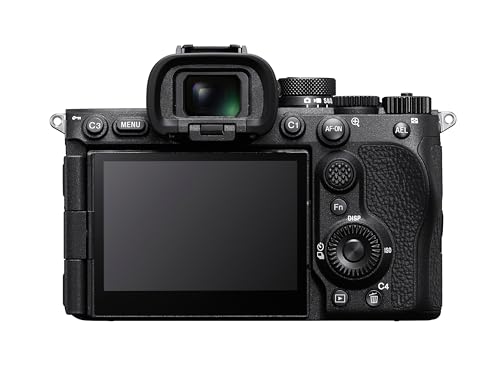
Who should buy this camera? The Alpha 7R VI is built for professional photographers who have historically been forced to carry two bodies — one for resolution, one for speed. If you shoot wildlife, sports, or photojournalism and also need maximum detail for large prints or heavy cropping, this camera eliminates the need for a second body. It’s also compelling for commercial photographers who need versatility across genres.
What verified reviewers commonly report: Praise centers on the autofocus system (described as “borderline magical” for bird and animal tracking), the blackout-free EVF experience, and the sheer detail in the files. Complaints focus on file size management, the cost of compatible memory cards, and the fact that the resolution bump over the 7R V feels modest unless you’re also leveraging the speed improvements. Several reviewers note that the camera demands excellent lenses to realize its full potential — budget glass will be the bottleneck, not the sensor. Some users also report that the learning curve for managing 30 fps workflows (culling thousands of near-identical frames) is steeper than expected.
The Total Cost of Ownership Question
The $4,498 body price is just the starting point. Here’s what a realistic Alpha 7R VI system costs to build and maintain:
- Lenses: Sony’s GM (G Master) lenses — the ones that can truly resolve 66.8 MP of detail — range from roughly $1,300 to $6,500 each. Budget lenses will create a bottleneck.
- Memory cards: CFexpress Type A cards with sufficient speed and capacity (160 GB+) typically cost $200-$400 each. You’ll want at least two.
- Storage: At ~130 MB per RAW file, a single day of heavy shooting can generate 100+ GB. A robust NAS or cloud storage solution is essential.
- Computer: Editing 66.8 MP files smoothly requires a modern workstation with 32+ GB of RAM and a fast SSD. Older laptops will struggle.
- Batteries: Sony NP-FZ100 batteries are reliable but you’ll want 3-4 for a full day of shooting, especially at high burst rates.
For photographers already invested in the Sony E-mount ecosystem with high-quality lenses, the upgrade cost is primarily the body itself. For newcomers building a system from scratch, budget $8,000-$15,000+ for a capable two-lens kit with accessories.
Should You Upgrade from the Alpha 7R V?
This is the question many Sony shooters are asking, and the honest answer depends entirely on your shooting style:
Upgrade if: You regularly shoot fast-moving subjects and have been frustrated by the 7R V’s 10 fps limit. The jump to 30 fps with a stacked sensor is transformative. Also upgrade if rolling shutter has been a problem in your electronic shutter work.
Skip if: You primarily shoot landscapes, architecture, or studio portraits at controlled paces. The 5.8 MP resolution increase won’t be visible in most real-world outputs, and the speed improvements won’t change your workflow. Your money is better spent on a new lens or lighting equipment.
For photographers considering alternatives in different segments of the market, it’s worth evaluating whether a smaller, lighter system might better serve your actual shooting habits before committing to a flagship full-frame body.
The Verdict: Is It Worth $4,500?
Yes, if you are a working professional who needs both extreme resolution and high-speed performance in a single body. The Alpha 7R VI genuinely does what no other camera can: it delivers medium-format-class resolution at sports-camera speeds. For wildlife photographers, photojournalists covering fast-paced events, and commercial shooters who work across genres, the 7R VI can replace two camera bodies and pay for itself through versatility.
No, if you’re an enthusiast or a specialist who works in a single genre that doesn’t demand both resolution and speed simultaneously. A landscape photographer will get 95% of the 7R VI’s image quality from the less expensive 7R V. A sports photographer who doesn’t need 66.8 MP might be better served by the Alpha 9 III or Alpha 1 II. And photographers on a tighter budget should consider the Nikon Z8, which offers stacked-sensor performance at a lower price point with slightly less resolution.
The Alpha 7R VI is an extraordinary piece of engineering. Whether it’s worth $4,500 depends not on what it can do, but on whether you will actually use what it does.
Frequently Asked Questions
Is the Sony Alpha 7R VI weather-sealed?
Yes. Sony states the 7R VI features improved dust and moisture resistance compared to the 7R V, though they stop short of providing an official IP rating. It’s designed for professional field use but shouldn’t be submerged or used in heavy rain without additional protection.
What memory cards does the Alpha 7R VI use?
The camera features dual card slots supporting CFexpress Type A and SD (UHS-I/II) cards. For maximum burst performance at 30 fps, CFexpress Type A cards are recommended.
Can I use my existing Sony E-mount lenses?
Yes. The Alpha 7R VI uses the Sony E-mount and is compatible with all Sony FE (full-frame) and E (APS-C, with crop) lenses, as well as third-party E-mount lenses from Sigma, Tamron, and others. However, to fully resolve 66.8 MP of detail, high-quality optics are essential.
How does the file size compare to the Alpha 7R V?
The 7R VI’s uncompressed RAW files are approximately 130-140 MB each, compared to roughly 120 MB for the 7R V. Lossless compressed RAW reduces this somewhat, but storage demands are still significant.
Does the Alpha 7R VI have a mechanical shutter?
Based on Sony’s published specifications and early reviewer reports, the 7R VI relies on an electronic shutter, following the trend set by the Alpha 9 III. The stacked sensor’s fast readout makes a mechanical shutter unnecessary for most applications.
How We Research
This review was compiled by synthesizing publicly available manufacturer specifications from Sony, published hands-on previews and reviews from established photography outlets, and verified customer feedback from retail platforms. We did not personally test, handle, or own the Sony Alpha 7R VI. Our goal is to provide an honest, well-sourced analysis that helps you make an informed purchasing decision. When we describe performance characteristics, we are reporting what Sony claims and what independent reviewers have corroborated — not our own first-hand measurements. We believe transparent, well-researched curation is more valuable than fabricated testing narratives.


Leave a Reply