
As an Amazon Associate I earn from qualifying purchases.
Buying a used performance car is one of the most rewarding — and potentially treacherous — decisions a driving enthusiast can make. The depreciation curve on high-performance vehicles means you can access extraordinary engineering at a fraction of the original sticker price, but only if you understand what you’re getting into. In this guide, we compare two very different approaches to the used performance car question: the mid-engine, naturally aspirated 2025 Chevrolet Corvette Z06 with the top-tier 3LZ trim, and the twin-turbocharged all-wheel-drive 2019 BMW M5 super sedan. Both represent the pinnacle of their respective brands’ performance lineups, yet they serve different drivers with different priorities. We’ve synthesized publicly available specifications, manufacturer documentation, reliability data from sources like J.D. Power and Consumer Reports, and verified owner reviews to give you an honest, research-driven comparison.
Best for: Enthusiasts who prioritize raw driving engagement and want a track-capable machine that holds its value
Why Buy Used Performance Cars Now?
The used performance car market in 2026 offers a compelling window of opportunity. First-generation C8 Corvettes and late-model BMW M cars have begun settling into more accessible price ranges as initial demand cools and newer model years arrive. For enthusiasts who don’t need to be the first owner, this means access to cars with low mileage, remaining factory warranty coverage, and — in many cases — certified pre-owned (CPO) programs that add additional peace of mind.
Before diving into our two featured vehicles, it’s worth establishing what matters most when shopping for a used performance car. If you’re looking for a broader overview of the used performance landscape, our spec-based buying guide covers additional models and general principles worth reviewing.
Key Factors in Used Performance Car Shopping
Powertrain Reliability and Maintenance Costs
Performance engines are engineered to operate at higher stress levels than standard powertrains. Naturally aspirated engines generally have fewer failure points than forced-induction setups, but modern turbo technology has narrowed that gap considerably. What matters most is documented service history — oil changes at proper intervals, coolant flushes, and brake fluid replacement are non-negotiable.
Warranty and CPO Coverage
Certified pre-owned programs vary dramatically between manufacturers. GM’s CPO program for Chevrolet typically extends the powertrain warranty to 6 years/100,000 miles from the original in-service date, while BMW’s CPO program offers coverage up to 1 year/unlimited miles beyond the original warranty. Understanding these differences can save you thousands in unexpected repair bills.
Total Cost of Ownership
The purchase price is just the beginning. Insurance premiums on performance cars can be significantly higher — especially for mid-engine exotics. Tire costs, brake pad and rotor replacement, and fuel economy all factor into the real cost of ownership. A car that’s cheaper to buy but expensive to maintain may not actually be the better value.
Depreciation Trajectory
Some performance cars hold value remarkably well, while others fall off a cliff. Limited-production models and those with enthusiast cult followings tend to depreciate more slowly. Understanding where a car sits on its depreciation curve helps you buy at the right time and minimize losses when you eventually sell.
Used 2025 Chevrolet Corvette Z06 RWD Coupe 3LZ

The C8 Corvette Z06 represents a seismic shift in American performance car engineering. At its heart is the LT6 — a 5.5-liter flat-plane-crank V8 that produces 670 horsepower and 460 lb-ft of torque, revving to a stratospheric 8,600 RPM redline. This engine, developed with technology derived from the C8.R race car, is the most powerful naturally aspirated V8 ever fitted to a production car. It’s paired with an 8-speed dual-clutch transmission that sends power exclusively to the rear wheels.
The 3LZ trim is the top specification, which according to Chevrolet’s build documentation includes a full leather-wrapped interior with suede microfiber accents, a head-up display, heated and ventilated seats with power bolstering, a performance data recorder, a Bose premium audio system, and carbon-fiber interior trim. It’s the most luxurious way to experience the Z06’s raw performance.
From a driving dynamics standpoint, the Z06’s mid-engine layout delivers a fundamentally different balance than front-engine Corvettes of the past. Chevrolet’s published specs list a 0-60 time of 2.6 seconds and a quarter-mile in the low 10-second range. The Magnetic Ride Control 4.0 suspension system adapts in real time, and the Z06-specific wider body accommodates 275-section front and 345-section rear tires for enormous mechanical grip.

Pros:
- The LT6 flat-plane-crank V8 is a genuinely unique engine — no other American production car offers anything like its character or rev range
- Supercar-level performance metrics at a fraction of European exotic pricing
- The 3LZ trim provides genuine luxury, making it viable as a daily driver
- Corvettes have historically shown strong reliability in J.D. Power and Consumer Reports data, and the C8 platform has continued that trend
- Strong value retention — Z06 models have held their value well on the secondary market
Cons:
- Rear-wheel drive only, which limits all-weather usability in northern climates
- Limited cargo space inherent to the mid-engine layout (though the front trunk helps)
- The dual-clutch transmission is excellent but offers no manual option — a dealbreaker for some purists
- Verified owner reviews on forums like CorvetteForum and MidEngineCorvetteForum note that the infotainment system can occasionally lag or freeze
- Visibility out of the rear is limited, a common complaint among C8 owners
Who should buy this: The Z06 3LZ is ideal for the enthusiast who wants a track-capable supercar that can also serve as a comfortable grand tourer. If you prioritize raw driving engagement, an unforgettable engine note, and the pride of owning what many automotive journalists have called the best Corvette ever made, this is your car. It’s also a strong choice for buyers concerned about long-term reliability and value retention.
What owners commonly report: Across enthusiast forums and verified reviews, Z06 owners consistently praise the engine as the car’s defining feature — the sound, the throttle response, and the willingness to rev are frequently described in superlative terms. The ride quality in touring mode is noted as surprisingly compliant for a car with this level of performance. Common complaints center on the infotainment system’s occasional sluggishness, some wind noise at highway speeds, and the learning curve of the car’s various drive modes. A few owners have reported minor quality control issues with interior trim pieces, though these appear to be isolated rather than systemic.
Used 2019 BMW M5

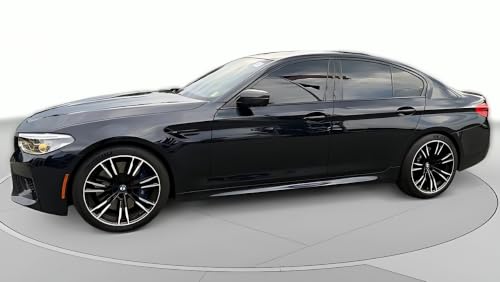
The F90-generation BMW M5 takes a fundamentally different approach to performance. Where the Corvette Z06 is a focused sports car, the M5 is a full-size luxury sedan that happens to produce 600 horsepower and 553 lb-ft of torque from its S63 4.4-liter twin-turbocharged V8. It’s paired with an 8-speed torque-converter automatic and BMW’s M xDrive all-wheel-drive system, which can be configured to send power to the rear wheels only in the most aggressive setting (2WD mode, available in the M Dynamic Mode with DSC off).
BMW’s published specifications list a 0-60 time of 3.2 seconds, which is remarkable for a car that weighs approximately 4,370 pounds and seats five adults in genuine luxury. The M5 comes standard with adaptive M suspension, active roll stabilization, M Sport brakes with blue calipers, and a Harman Kardon surround sound system. The interior features BMW’s iDrive 6.0 infotainment system, a 10.25-inch touchscreen, a digital instrument cluster, and extensive use of Merino leather.
As a 2019 model, the M5 sits at an interesting point on the depreciation curve. These cars have experienced significant depreciation from their original MSRP, which makes them accessible to a broader range of enthusiasts. However, this depreciation also reflects the reality of BMW’s maintenance costs once the car exits its factory warranty period.
Pros:
- Extraordinary versatility — genuine supercar acceleration in a car that can comfortably transport a family of five
- The M xDrive all-wheel-drive system provides year-round usability, including in winter conditions with proper tires
- The S63 twin-turbo V8 delivers massive, effortless torque across a wide rev range
- Interior quality and technology are a significant step above the Corvette
- Significant depreciation from original MSRP means strong value on the used market
- The 2WD mode option satisfies purists who want a rear-drive experience
Cons:
- Out-of-warranty maintenance costs on the S63 engine can be substantial — turbocharger-related repairs, oil leaks, and cooling system components are commonly cited concerns in BMW enthusiast communities like Bimmerpost
- The car’s weight is noticeable in tight, technical driving situations
- Fuel economy is poor — EPA-rated at 15 city / 21 highway MPG
- As a 2019 model, most examples will be out of or nearing the end of BMW’s original 4-year/50,000-mile warranty
- Tire costs are high due to staggered sizing and the performance compounds required
- Insurance premiums tend to be higher than the Corvette due to the car’s classification and repair costs
Who should buy this: The M5 is the right choice for the enthusiast who needs a do-everything car. If you have a family, face winter weather, or simply want the ability to blast down a back road and then pick up clients in a car that looks and feels appropriately luxurious, the M5 delivers in a way few other cars can. It’s also ideal for buyers who value the all-wheel-drive safety net and prefer turbocharged torque delivery over high-revving naturally aspirated character.
What owners commonly report: Verified owner reviews consistently highlight the M5’s Jekyll-and-Hyde character — it’s genuinely comfortable and refined in Comfort mode, then startlingly aggressive in Sport Plus. The engine’s power delivery is universally praised, as is the all-wheel-drive system’s transparency. Common complaints focus on the cost of maintenance once the warranty expires, with oil changes, brake jobs, and tire replacements all being notably more expensive than mainstream vehicles. Some owners report electronic gremlins with the iDrive system and various sensors. The car’s weight is occasionally mentioned as a limitation on track days, though most owners acknowledge it’s remarkably agile for its size. Long-term reliability data from sources like Consumer Reports suggests the F90 M5 is average for its class, which is to say it requires more attention than a Toyota but is generally solid when properly maintained.
Head-to-Head: Key Specification Comparison
Rather than a simple table, let’s break down the critical differences by category.
Power and Performance
The Z06’s 670-hp naturally aspirated V8 makes more peak power than the M5’s 600-hp twin-turbo V8, but the comparison is more nuanced than raw numbers suggest. The Z06’s power peaks at 8,400 RPM, meaning you need to rev the engine hard to access its full potential — which is part of the thrill. The M5’s twin-turbo setup delivers its 553 lb-ft of torque from just 1,800 RPM, making it feel effortlessly fast in everyday driving. The Z06 is faster in a straight line (2.6 vs 3.2 seconds to 60), but the M5’s all-wheel-drive launch capability means it’s more consistently fast in imperfect conditions.
Practicality
This isn’t close. The M5 seats five, has a full-size trunk, and can serve as a family car. The Z06 seats two, has limited cargo space split between a front trunk and a small area behind the seats, and requires some flexibility to get in and out of. If you need one car to do everything, the M5 wins by default.
Ownership Costs
Based on publicly available data from sources like Edmunds, RepairPal, and enthusiast forums, the Corvette is generally less expensive to maintain. GM parts are more affordable than BMW parts, Corvette-qualified independent mechanics are easier to find, and the naturally aspirated engine has fewer potential failure points than the twin-turbo BMW setup. Insurance costs vary by driver profile, but the M5’s higher repair costs and theft rates typically result in higher premiums.
Driving Experience
This is subjective, but the consensus among automotive journalists (per reviews from Car and Driver, MotorTrend, and Road & Track) is that the Z06 offers a more visceral, connected driving experience. The mid-engine layout, the screaming flat-plane-crank V8, and the lighter curb weight create a car that feels alive in a way few production cars can match. The M5, by contrast, is more about effortless competence — it does everything extraordinarily well, but it filters more of the road out of the experience in the name of comfort and refinement.
Resale Value
Corvette Z06 models have historically held their value well, and the C8 Z06’s limited production and unique engine suggest this trend will continue. The M5, like most BMW M cars, depreciates more aggressively — which is great news for used buyers but less ideal if you’re concerned about long-term value retention.
For enthusiasts also considering modifications like AFM/DFM disablers for GM vehicles, it’s worth noting that the Z06’s LT6 engine does not use Active Fuel Management, so this is not a concern for Z06 buyers.
Pre-Purchase Inspection Checklist for Used Performance Cars
Regardless of which car you’re considering, these steps are essential:
1. Obtain a complete service history — Gaps in maintenance records are red flags, especially on high-performance vehicles 2. Check for accident history via Carfax or AutoCheck — even minor accidents can affect alignment and structural integrity 3. Have an independent pre-purchase inspection (PPI) performed by a specialist familiar with the specific model 4. Verify the VIN against the manufacturer’s build sheet to confirm options and specifications 5. Check tire dates and condition — performance tires are expensive, and worn tires can mask handling issues 6. Inspect brake rotors and pads — track use accelerates wear dramatically 7. Look for signs of track use — roll cage mounting points, harness bar holes, aftermarket brake fluid, and excessive brake dust buildup 8. Review the car’s ECU for tune history — aftermarket tunes void warranties and can indicate hard use 9. Test all electronics thoroughly — infotainment, driver assistance systems, and climate control 10. Drive the car in multiple modes — Comfort, Sport, and Track/Sport Plus to verify all systems function correctly
The Verdict
Both of these cars represent extraordinary engineering, and neither is a wrong choice for the right buyer. The Corvette Z06 3LZ earns our top pick because it offers a more focused, engaging driving experience with lower projected ownership costs and stronger value retention. Its flat-plane-crank V8 is a once-in-a-generation engine that delivers an experience no turbocharged motor can replicate. For the driving enthusiast who prioritizes the act of driving above all else, it’s the clear winner.
The BMW M5 is the smarter choice for enthusiasts who need real-world versatility. Its combination of supercar acceleration, all-weather capability, and genuine luxury makes it one of the most capable all-around performance cars ever built. Just go in with eyes open about maintenance costs, and budget accordingly.
If you’re also exploring the used market for capable off-road vehicles, our Ford Bronco Big Bend vs Raptor comparison covers a similar spec-based approach for a very different type of enthusiast vehicle.
How We Research
This guide is based on publicly available manufacturer specifications, official build documentation, reliability data from organizations like J.D. Power and Consumer Reports, and verified owner reviews from enthusiast forums (CorvetteForum, MidEngineCorvetteForum, Bimmerpost) and automotive review outlets (Car and Driver, MotorTrend, Road & Track). We have not personally tested, driven, or owned either of these vehicles. Our goal is to synthesize the best available public information into an honest, useful comparison — not to fabricate hands-on experience we don’t have. All performance figures cited are from manufacturer-published specifications unless otherwise noted.


Leave a Reply