
As an Amazon Associate I earn from qualifying purchases.
A professional-grade bidirectional OBD2 scanner is the centerpiece of any serious diagnostic setup — but it rarely works alone. Whether you’re a weekend DIY mechanic chasing an intermittent misfire or a shop technician performing active tests on a customer’s vehicle, the right companion accessories can dramatically extend what your scanner can do. From backup code readers that stay plugged in while you work, to circuit tracers that pick up where fault codes leave off, to training workbooks that sharpen your diagnostic logic, the tools around your scanner matter just as much as the scanner itself. In this guide, we’ve researched and curated five products that pair naturally with a bidirectional scan tool — covering upgraded scanners, learning resources, budget backup readers, and electrical diagnostic instruments.
Best for: DIY mechanics and independent shop technicians building a complete diagnostic toolkit
Why Your Bidirectional Scanner Needs Companion Gear
A bidirectional scanner lets you send commands to vehicle modules — cycling ABS pumps, activating fuel injectors, performing EVAP tests — but it can’t do everything. You still need a way to trace wiring faults the scanner flags, a backup reader to leave connected during road tests, and reference material to interpret the data your scanner returns. Think of your bidirectional tool as the brain of your diagnostic workflow; the accessories below are the hands, eyes, and textbook that complete the picture.
If you’re still exploring the broader OBD2 ecosystem, our guide on how to set up an OBD2 fuel-saving device covers the basics of the OBD-II port and protocol compatibility.
1. FOXWELL NT726 OBD2 Bidirectional Scan Tool
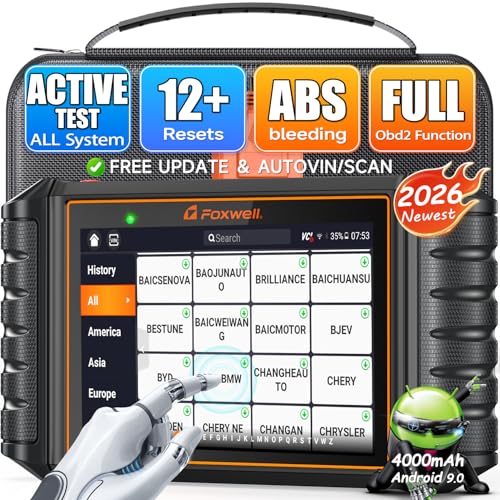
The FOXWELL NT726 is positioned as a mid-tier professional scanner that punches well above its weight class. According to FOXWELL’s product documentation, it offers all-system diagnostics — engine, transmission, ABS, SRS, and more — plus bidirectional control and 12 commonly needed service resets including oil reset, EPB, SAS, TPMS, BMS, throttle adaptation, DPF regeneration, and injector coding. That breadth makes it a strong primary scanner or a powerful upgrade companion if your current bidirectional tool is limited to a few systems.
Verified customer reviews frequently praise the NT726’s build quality and the clarity of its color display. Many DIY users report that the all-system coverage eliminates the frustration of hitting “not supported” messages on cheaper scanners. On the flip side, some reviewers note that the menu navigation can feel sluggish on older vehicle protocols, and a few have mentioned that software updates, while free for a period, require a Windows PC — there’s no Mac or mobile update path.

This scanner is best suited for the DIY mechanic who has outgrown a basic code reader and wants bidirectional capability without the four-figure price tag of dealer-level tools. Shop technicians may also find it useful as a secondary handheld unit for quick jobs. If you already own a FOXWELL scanner like the NT604 Elite, our setup guide for that model covers tips that apply across the FOXWELL lineup.
2. Automotive Diagnostics Workbook — Step-by-Step Fault Finding Training

Having a powerful bidirectional scanner is only half the equation — you also need to know what to do with the data it returns. This workbook takes a structured, exercise-based approach to automotive fault finding, walking readers through diagnostic logic using real OBD codes and measurement scenarios. It’s designed as a training companion rather than a reference manual, meaning you work through problems rather than just reading about them.
Reviewers who are self-taught mechanics consistently highlight how the workbook fills gaps in their diagnostic reasoning. Several note that it helped them move beyond “Google the code and replace the part” toward systematic troubleshooting. The step-by-step format is praised for being accessible to beginners without being condescending to experienced wrenchers. Common criticisms include the book’s relatively slim page count for the breadth of topics it attempts to cover, and a few readers wished for more advanced case studies involving CAN bus and network-level faults.
This workbook is ideal for anyone who owns a bidirectional scanner but finds themselves unsure how to interpret live data, correlate multiple fault codes, or decide which active test to run next. It pairs especially well with a capable scanner like the NT726 because you can follow along with the exercises on a real vehicle. For those exploring the cost side of scanner ownership, our article on the true cost of owning a BlueDriver scanner offers useful context on what ongoing expenses look like.
3. MOTOPOWER MP69033 OBD2 Code Reader

Every diagnostic toolkit benefits from a simple, dedicated code reader that you can leave plugged in, lend to a friend, or toss in the glovebox for roadside checks. The MOTOPOWER MP69033 fills that role. It reads and clears engine fault codes on all OBD-II protocol vehicles (1996 and newer in the US), displays freeze-frame data, and retrieves the vehicle’s VIN. It draws power directly from the OBD-II port, so there are no batteries to charge or replace.
Customer reviews overwhelmingly describe this as a “does exactly what it says” tool. Users appreciate the straightforward interface — a few buttons, a small monochrome screen, and no app or Bluetooth pairing required. The compact size and included OBD cable make it easy to store. On the downside, it’s strictly an engine code reader: no ABS, no SRS, no transmission codes, and certainly no bidirectional control. A handful of reviewers report slow boot times on certain vehicles, and the screen can be hard to read in direct sunlight.

The MP69033 is best for DIY mechanics who want a cheap, reliable backup reader alongside their primary bidirectional scanner. It’s the tool you grab when you just need to quickly check if a CEL is a loose gas cap or something more serious — saving your advanced scanner’s boot-up time for jobs that actually need it.
4. ANCEL AD310 Universal OBD II Scanner
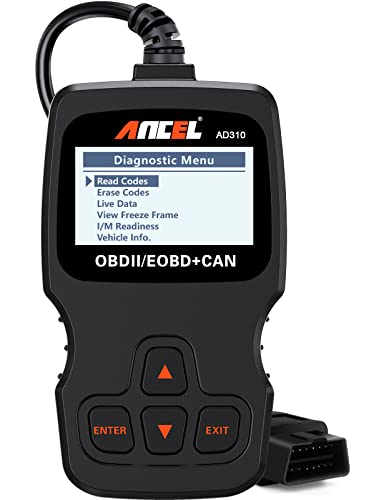
The ANCEL AD310 occupies similar territory to the MOTOPOWER above but comes from a brand with deeper roots in the automotive diagnostic space. It reads and clears engine DTCs, displays live sensor data (RPM, coolant temp, vehicle speed, oxygen sensor readings), and supports all five OBD-II protocols. The built-in cable is a fixed length, which some users prefer over a detachable cable that can get lost.
Reviewer sentiment is broadly positive, with many praising the AD310’s reliability across a wide range of vehicles — from older domestic trucks to newer imports. The I/M readiness function is frequently cited as useful for pre-emissions-test checks. Common complaints center on the small screen size and the lack of a backlight on some units, making it difficult to use in dim garages. A few users also note that the fixed cable, while convenient, limits how far you can sit from the OBD port.

The AD310 is a solid choice for mechanics who want a no-frills code reader with live data capability as a complement to their bidirectional scanner. It’s also a great loaner tool — inexpensive enough that you won’t worry about handing it to a neighbor. For a deeper look at ANCEL’s broader product line and vehicle compatibility, check out our ANCEL FX6100 compatibility guide.
5. EM415Pro Automotive Circuit Breaker Finder & Wire Tracer
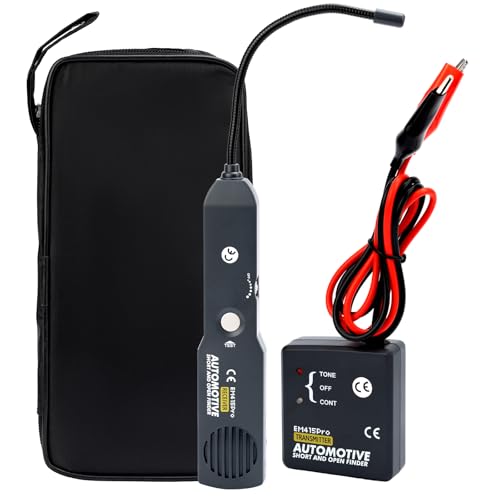
Your bidirectional scanner can tell you that a circuit has a fault — but it can’t tell you where in the wiring harness the problem lives. That’s where the EM415Pro comes in. This handheld tool traces wires and locates short circuits, open circuits, and breaks in automotive electrical systems operating between 6V and 42V. It works by sending a signal through the wire and using a receiver to follow the cable path through the vehicle’s harness, even behind panels and under carpet.
Verified reviewers frequently describe the EM415Pro as a time-saver that pays for itself on the first job. Technicians report using it to trace parasitic draws, locate chafed wires behind dashboards, and find shorts in trailer wiring. The voltage measurement function is a useful bonus. On the negative side, some users note that the signal can be difficult to follow in areas with dense wiring bundles, and the included instructions could be more detailed. A few reviewers also mention that battery life (it uses standard batteries) is adequate but not exceptional during extended tracing sessions.

This tool is essential for anyone who regularly deals with electrical gremlins — the kind of intermittent faults that throw vague codes on your scanner. It bridges the gap between “the scanner says there’s a wiring fault” and “here’s the exact spot where the wire is damaged.” Both DIY mechanics and professional technicians will find it invaluable.
How These Accessories Work Together
The real power of these products emerges when you use them as a system. Here’s a typical diagnostic workflow:
1. Quick check with the MOTOPOWER or ANCEL reader — Plug in, pull codes, and decide if the issue warrants firing up your bidirectional scanner. 2. Deep diagnosis with the FOXWELL NT726 — Run all-system scans, check live data across modules, and perform bidirectional active tests to isolate the faulty system. 3. Trace the fault with the EM415Pro — If the scanner points to a wiring or circuit issue, use the wire tracer to physically locate the problem. 4. Sharpen your skills with the Diagnostics Workbook — After the job, review similar case studies to build your diagnostic intuition for next time.
This layered approach saves time, reduces parts-swapping guesswork, and builds genuine diagnostic competence over the long term.
What Else to Consider for Your Diagnostic Setup
Beyond the products reviewed here, a complete diagnostic toolkit often includes:
- A quality multimeter — For verifying voltage, resistance, and continuity at specific pins and connectors.
- A protective carrying case — Many bidirectional scanners ship with a basic case, but a padded hard-shell case protects your investment during mobile work.
- OBD-II extension cables — A 3-to-5-foot extension lets you operate your scanner from the driver’s seat or workbench instead of crouching by the footwell.
- A reliable Wi-Fi or cellular hotspot — Many modern scanners require internet access for software updates and VIN-based vehicle identification.
- Nitrile gloves and a headlamp — Mundane but essential when you’re tracing wires in dark engine bays.
Frequently Asked Questions
Do I really need a backup code reader if I already have a bidirectional scanner?
It’s not strictly necessary, but it’s highly practical. A basic code reader boots instantly, draws no battery power, and can stay plugged in during test drives. Your bidirectional scanner is overkill for a quick CEL check, and keeping it in the toolbox for complex jobs extends its lifespan.
Can I use any OBD-II extension cable with my scanner?
Most scanners work fine with standard 16-pin OBD-II extension cables, but verify that the cable passes all 16 pins (some cheap cables only wire the most common pins). A poor-quality cable can cause communication errors that mimic vehicle faults.
How often should I update my bidirectional scanner’s software?
Manufacturers like FOXWELL and ANCEL typically release updates quarterly or when new vehicle coverage is added. Check for updates before starting a job on an unfamiliar vehicle — outdated software is a common cause of “vehicle not supported” errors.
Is a wire tracer useful for DIY mechanics, or is it only for shops?
Anyone who works on automotive electrical systems will benefit. Parasitic battery drains, trailer wiring issues, and aftermarket accessory installations are common DIY scenarios where a wire tracer saves hours of guesswork.
How We Research
We have not personally tested, owned, or handled any of the products in this guide. Our reviews are based on a thorough synthesis of manufacturer specifications, official product documentation, and patterns found across verified customer and expert reviews on Amazon and automotive forums. We cross-reference multiple sources to identify consistent praise and recurring complaints, and we clearly distinguish between documented specs and user-reported experiences. This honest, research-based approach ensures you get reliable information without fabricated hands-on claims.


Leave a Reply